Patient portal

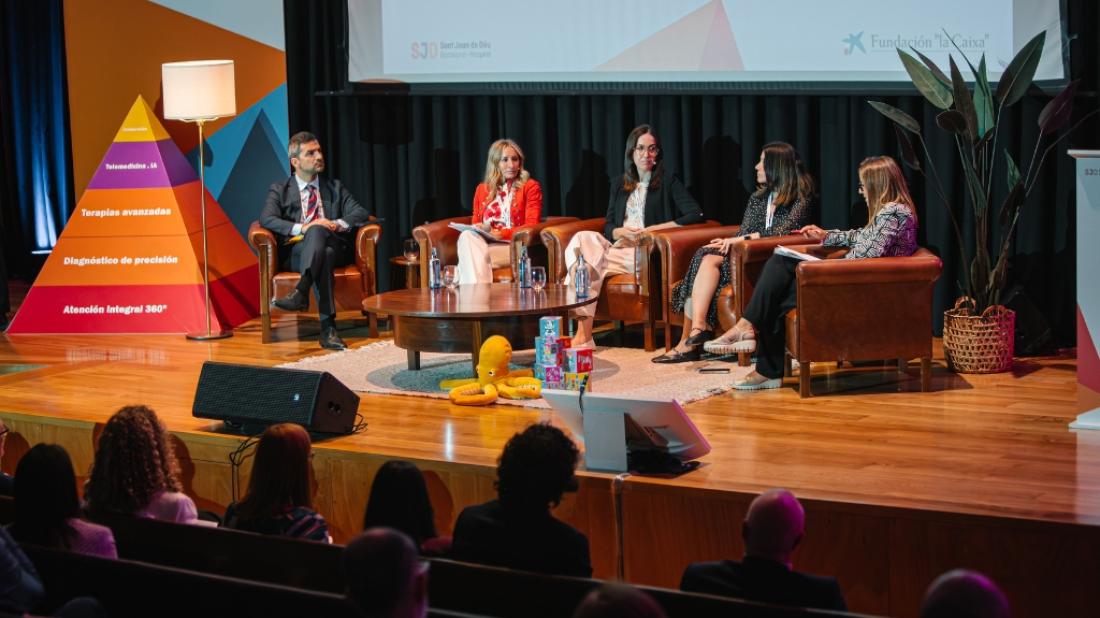
The event, which has seen the participation of public authorities, partner companies, healthcare institutions and industry professionals, has established itself as a forum for sharing information and discussion in this third edition.
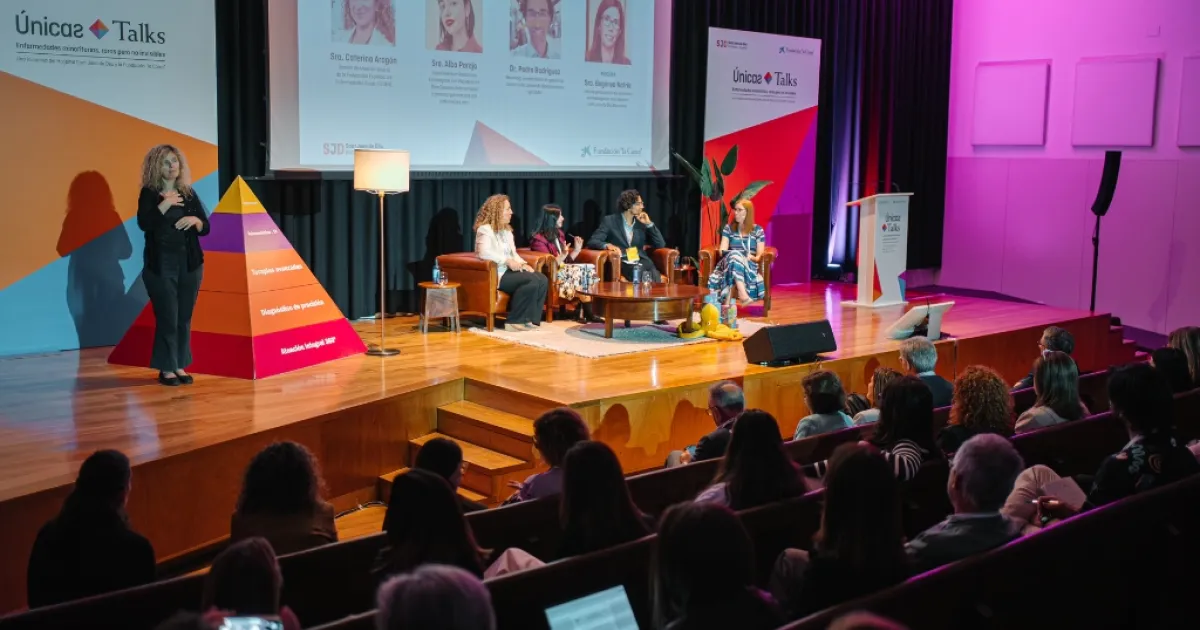
Únicas Talks has held its third edition, this time at the Galician Centre for Contemporary Art in Santiago de Compostela, under the title: ‘We continue to make progress in finding solutions for “Únicas” needs’. This forum, promoted by the SJD Barcelona Children's Hospital and the “la Caixa” Foundation, discussed the challenges and advances in paediatric rare diseases: from government strategies to tackle these diseases to diagnosis, the care model and therapeutic innovations.
The event was organised in collaboration with various leading organisations in the healthcare sector, such as the Galician Health Service and the Spanish Federation of Rare Diseases (FEDER), and featured experts from the research, clinical, business and regulatory sectors, as well as representatives from government and patient and family associations.
In his opening remarks, the manager of SJD Barcelona, Dr Miquel Pons, stated that the Ministry of Health’s Únicas Network continues to progress and develop as planned, with the aim of enabling hospitals across the region to share all the necessary information to ensure better care for rare diseases.
In this vein, Dr María del Rosario Fernández, Deputy Director-General for Quality of Care at the Directorate-General for Public Health and Health Equity of the Ministry of Health, highlighted the importance of the CSURs as key players in this networked communication.
The event took the form of a series of talks designed to pool knowledge.
Institutional strategies for rare diseases
The conference began with a panel discussion on the strategies that need to be adopted, particularly by institutions, to improve care for rare diseases. Juan Carrión, president of FEDER and one of the participants in this session, highlighted that: “Tackling the complexity of rare diseases requires strict coordination between all stakeholders. For the voluntary sector, the value of the Red Únicas lies in its ability to pool resources.”
Thus, in coordination with the Ministry of Health, they explained that all protocols and action plans are being reviewed in line with the latest updates on rare diseases, always placing the patient and their family at the centre. “We are at a key moment for establishing channels to share clinical knowledge among participating hospitals. Pooling this knowledge is the essential first step towards making progress,” remarked Carrión.
"Having a supportive regulatory environment and early access to new treatments is crucial when a disease has such a profound impact on people’s lives."
Advances in diagnosis
The second session focused on presenting various projects aimed at improving the diagnosis of these diseases. Dr María Luz Couce, scientific director of the Health Research Institute in Santiago de Compostela, spoke about the CrinGenES neonatal screening project. “Access to rapid genetic diagnosis should not depend on the postcode where you live. It is not a question of every hospital having all the diagnostic technology, but all patients must have an effective point of entry,” said Couce.
Dr Encarna Guillén, strategic director of the Únicas SJD project and head of the Genetics Department at SJD Barcelona, added: “Collaboration is essential; we cannot act in isolation, and Únicas SJD is working on various initiatives. The experience with the Únicas Hackathon, alongside CIBERER, Impact Genómica and others, was an example of how integrating techniques and collaborating can yield results beyond expectations, and we were able to achieve a diagnosis rate of over 50%.”
Therapeutic innovation
Regarding therapeutic innovation, the experts have expressed a positive outlook on the creation and application of new treatments in Europe. Although these are complex, costly and personalised therapies, they assert that medical innovation in this field is being driven forward. In this regard, they considered it important to know exactly where investment should be focused.
Beyond innovation—which Dr Paula Río, president of the Spanish Society for Gene and Cell Therapy, has stated is accompanied by the best possible technology—the experts have addressed the issue of accessibility. “Having a regulatory framework and early access to new therapies is key when a disease has such a profound impact on life,” said Beatriz Perales, president of the Spanish Association of Orphan and Ultra-Orphan Drug Laboratories (AELMHU).
Knowledge of rare diseases is very recent, and this means there is less experience with these new therapies. Dr Laura Carrera, a paediatric neurologist at Sant Joan de Déu Hospital, points out that in the future it will be essential to monitor the progress of treated patients.
"Almost 220 treatments have been identified thanks to the agreement with the Columbus Foundation, but they are expensive and no one wants to manufacture them."
Equity of access
Care for rare diseases varies greatly between countries and even between communities and hospitals. This hinders access to innovative treatments for these conditions. Dr Pedro Rodríguez, a clinical genomics specialist at the CNAG working in Senegal, explained that 95% of the data in the databases they use is European. “For other populations, it is not as useful, which adds to the difficulty of diagnosis,” he commented.
Furthermore, it is not just a matter of postcode; factors such as a family’s socio-economic status or the support available to patients also play a role. All of this directly affects the progression of the disease. Caterina Aragón, a frontline care worker at FEDER, assured that there is awareness of these shortcomings and that they are developing a wide range of initiatives to address all areas of need.
Conclusions of the conference
Dr Manel del Castillo, Secretary General of Hospitality Europe and strategic advisor to Únicas, reflected on the direction Únicas should take in the future. “We have to resolve structural flaws. It is very important to preserve what already works and not to overlap with other initiatives. We must be the missing pieces of the jigsaw.”
Del Castillo mentioned that some of the issues requiring a solution include the development of care programmes based on the data being collected, as well as the need for stable funding. “Almost 220 therapies have been identified thanks to the agreement with the Columbus Foundation, but they are expensive and no one wants to manufacture them. One mother said that not having a therapy is a misfortune, but having it and not being able to provide it is an injustice," she remarked.
To conclude, Dr Encarna Guillén summarised the main ideas from each discussion panel. She also stated that we must continue to fight to turn challenges into opportunities by working together so that solutions emerge from problems. “Let’s keep the light on and move forward on the path of knowledge to improve the lives of people with rare diseases,” said Guillén.
The next edition of Únicas Talks will be held in 2027 in Valencia.
Related news