Patient portal

“Despite the great technological advances in neurosurgery, supporting families remains the most important thing”
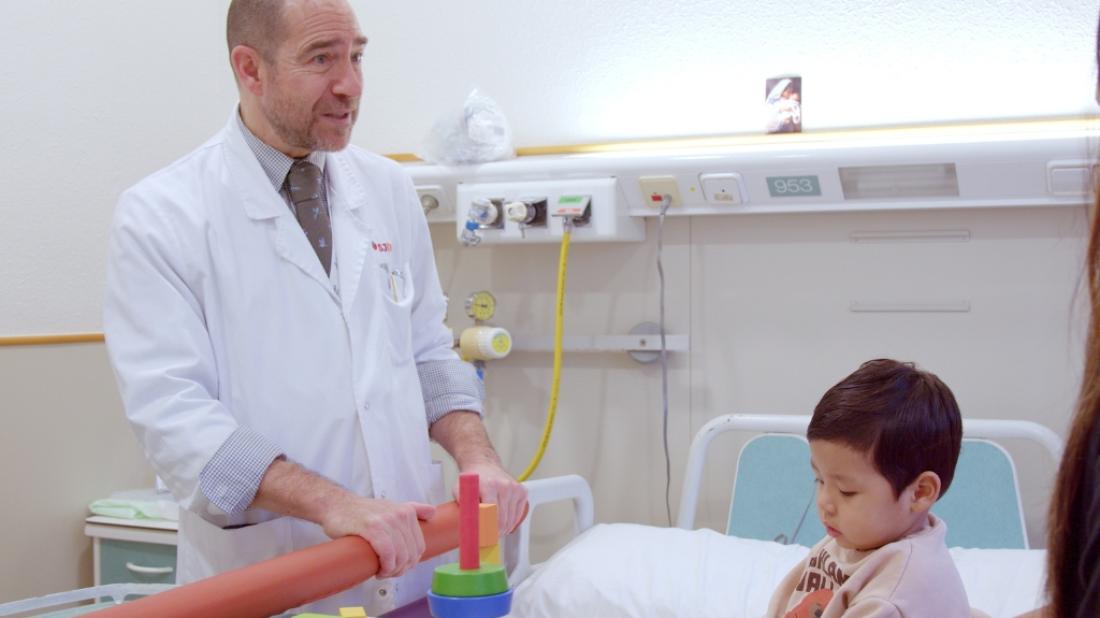
José Hinojosa, head of the Neurosurgery Department at SJD Barcelona Children’s Hospital, explains the scientific, technological and human challenges involved in neurosurgical procedures.
Ever since he was a child, Dr José Hinojosa knew he wanted to pursue a career in medicine. There was no specific reason, but he had a passion that drove him and stayed with him throughout his training. Nor did he have any doubts when it came to choosing a specialism; neurosurgery combined everything he loved. “It was an extremely demanding speciality at the cutting edge of technology, focused on the most complex and fascinating organ in the human body,” says the head of the Neurosurgery Department at SJD Barcelona Children’s Hospital.
Paediatric neurosurgery hadn’t featured in his initial plans, but a vacancy in Madrid after he’d completed his training changed everything. “I accepted the challenge and, within a matter of months, I knew this was my true calling,” confesses Hinojosa, recalling how he was drawn to a field brimming with opportunities for development and in need of dedicated specialists.
For the doctor, the main difference between paediatric and adult neurosurgery is the relationship with patients, as “when you treat a child, you’re also treating their parents and the whole family,” he says. Every case presents a demanding challenge, but being able to see, years later, children he has operated on grow into adults leading independent lives is, he says, one of the greatest rewards of his profession.
Neurosurgery at the Hospital
The Neurosurgery Department at SJD Barcelona stands out for its multidisciplinary approach. Here, specialists in neurosurgery, nursing, clinical care and paediatrics work together across the board throughout the entire care process. Hinojosa explains: “It’s not just about the operation; it’s also about supporting families, coordinating care and offering the best possible support throughout the process.”
Many of the department’s patients are children with complex conditions, particularly international patients who are exploring the possibilities of innovative or advanced treatments that are often unavailable in their home countries. Dr Hinojosa considers the treatment of these patients to be one of the most rewarding aspects of his work, both because of the medical challenge it presents and because of the opportunity to support families from different cultural backgrounds.
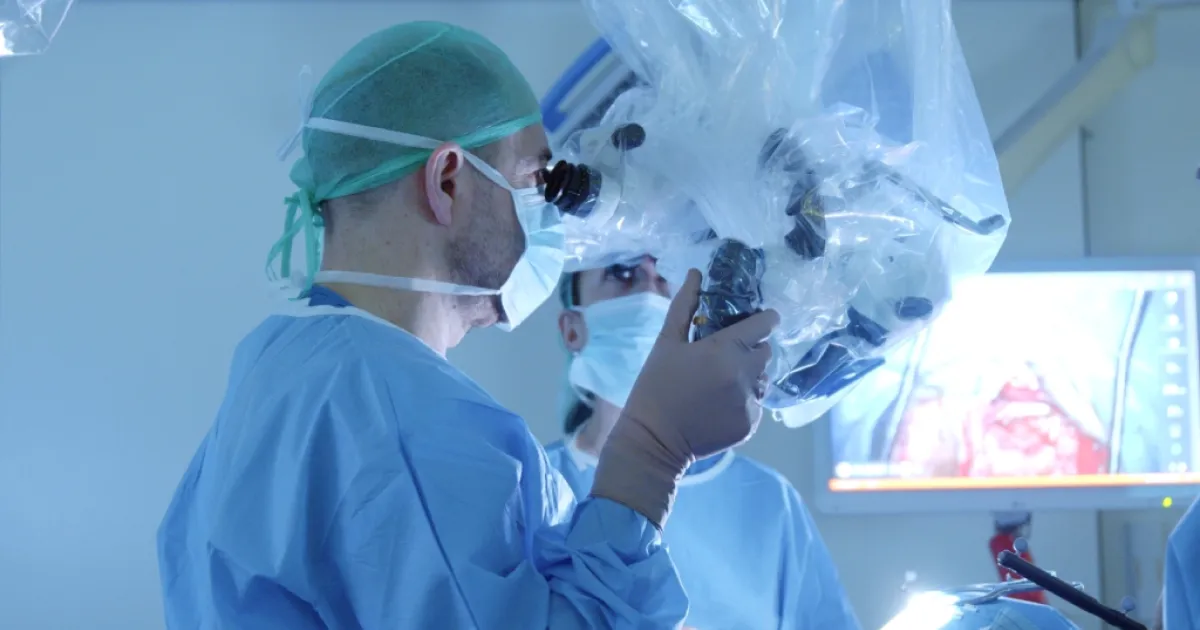
Neurosurgery has undergone a radical transformation since the start of Dr Hinojosa’s career. Pre-operative planning, surgical navigation, robot-assisted surgery and augmented reality allow for much greater precision during procedures. “Nowadays we can plan surgery using high-precision virtual simulations, predictively controlling every manoeuvre, its impact and possible consequences,” he explains. In this regard, he is convinced that the future lies in integrating these tools with artificial intelligence and new, less invasive techniques.
A passion for precision
One of José Hinojosa’s great passions is diving. For years he has devoted much of his free time to this activity and acknowledges that he finds many similarities with his work. Both a dive and a neurosurgical procedure require very thorough preparation beforehand. “In both cases, you need to plan every detail, anticipate what might happen and be ready to make decisions at any moment,” he concludes.
Related news