Patient portal

"Children with alopecia areata have to put up with a lot of pitying looks because people think they have cancer"
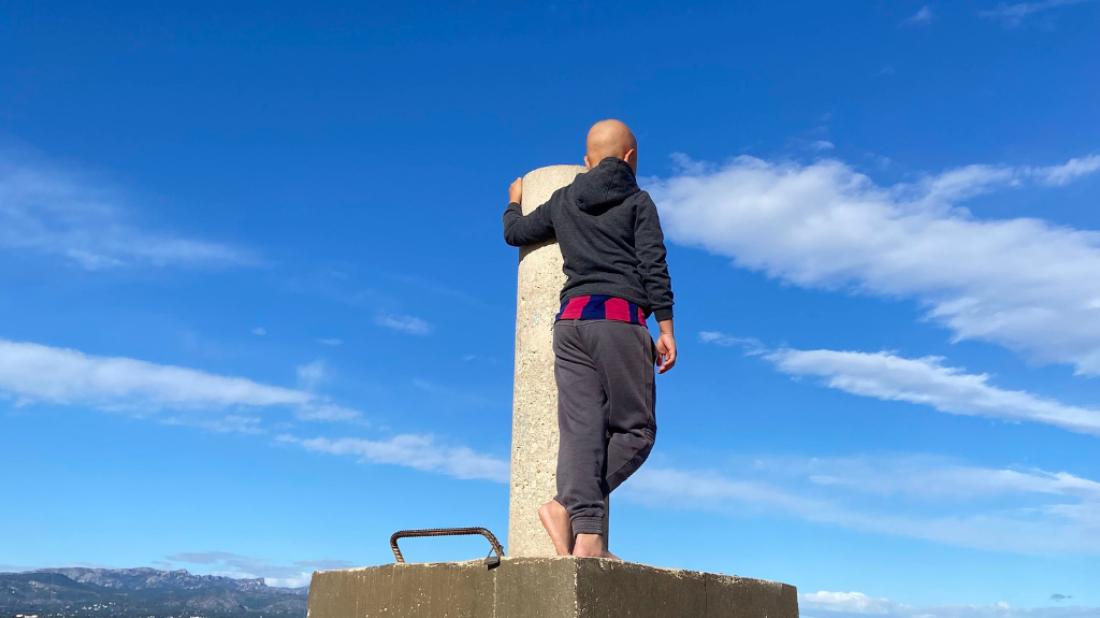
A study examines the impact that this autoimmune condition, which causes hair loss, has on children and their families.
Leo was seven years old when his hair started falling out. His mother recalls that, previously, he had occasionally developed small bald patches on his head, but they had never paid it much attention because his hair would grow back straight away. Until one day, at the swimming pool, whilst drying his hair, it began to fall out in clumps. Over the following days, the situation worsened and his worried parents decided to take him to the doctor.
“It was a particularly difficult time,” explains Desirée, Leo’s mother, “because it coincided with a bout of very high fever, and at first we didn’t know if there was any connection.” The paediatrician reassured them that there wasn’t: Leo had caught the flu and the hair loss had nothing to do with it. His mother recalls that the doctor prescribed a lotion, but it didn’t work. “He was still losing more hair, so much so that we decided to shave his head. I remember that when Leo saw himself without hair, he said to the hairdresser, ‘You’ve made me bald,’ and she replied, ‘You haven’t gone bald, we’ve just shaved your head.’ And that’s exactly what he would say, some time later, to the children who asked him why he was bald.”
After carrying out various tests, the paediatrician suspected it was alopecia areata, an autoimmune condition in which the body’s own immune system attacks the hair follicles, causing hair loss. It can occur at any age, but between 30–40 per cent of cases begin in childhood or adolescence. It is not a serious physical condition, but it can have a significant emotional impact on children who have it. This is highlighted by a study carried out by the SJD Barcelona Children's Hospital, in which Leo’s family took part alongside 60 others.
A significant emotional impact
The study, carried out by the Dermatology Department, aimed to investigate the emotional, social, educational and financial impact of alopecia areata on children and adolescents in Spain. One of the authors, dermatologist Carolina Prat, explains that the results show the main impact of this condition is more emotional than clinical or financial. “Some 67 per cent of carers experience feelings of guilt, helplessness and grief due to the social stigma – and sometimes bullying at school – suffered by these children; and also because of the uncertainty surrounding the progression of the condition,” adds Prat.
Desirée believes that in her son’s case the impact was less severe because Leo was very young when he lost his hair and was still a young boy. “If this happened to my daughter, who is now 12, I wouldn’t be able to get her out of the house,” she says. “There is a great deal of ignorance about this condition,” she continues, “and children who have it have to put up with a lot of pitying looks because people associate a child without hair with a child who has cancer.”
His hair has grown back. His paediatrician referred him to SJD Barcelona Children's Hospital, and it was there that the diagnosis was confirmed and he was prescribed a course of cortisone. His hair grew back. But when they began to wean him off the treatment, it fell out again. “It was tough because it was like starting all over again,” says Desirée. The dermatologists treating him prescribed another treatment which, this time, did produce good results. Today, Leo is still undergoing treatment and has hair just like any other child his age.
Related news