Patient portal

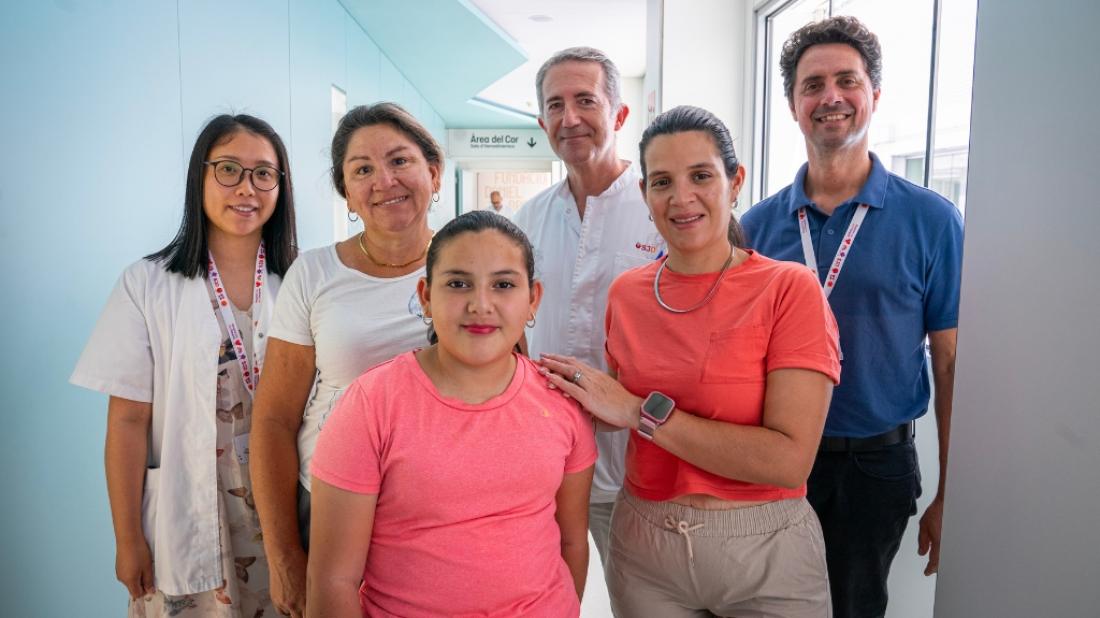
Mariangel, a 13-year-old girl from Costa Rica with congenital heart disease, successfully underwent mitral valve replacement surgery at the SJD Barcelona Children’s Hospital.
Mariangel was born with a complex congenital heart disease. At just one and a half months old, she had surgery to replace her mitral valve with a biological prosthetic in her home country. At three years old, this valve was replaced with a mechanical valve.
The mitral valve, located between the two left chambers of the heart, regulates blood flow. As the girl grew, specialists considered it necessary to swap the prosthetic mitral valve for a bigger one so that her heart could function properly. Due to the complexity of the operation, the family decided to seek alternatives abroad.
Thanks to a recommendation from another family that had been treated at the SJD Barcelona Children's Hospital, Mariangel's parents contacted the hospital themselves. They received a rapid response and swiftly planned their travels.
Treatment at the SJD Barcelona Children's Hospital
The girl had surgery on 27 May 2025. Despite its complexity, the operation went smoothly and Mariangel quickly recovered. She was discharged just eight days after her operation.
Marta, her mother, highlights the support her family received as a key part of her experience at the hospital: ‘I was able to be with her at all times, even in the operating theatre. It was a nice experience, because it put her at ease. They also let me be with her in the ICU, day or night, and let family members visit.’
Dr Stefano Congiu, Head of Heart Surgery at the SJD Barcelona Children's Hospital explains that ‘a mitral valve replacement is a complex surgical procedure. In Mariangel’s case, she was at high risk of needing a pacemaker. But thankfully, that was not necessary.’
Mariangel also shares how her life has changed since her operation: ‘Before, I was very tired and had no energy. I couldn't walk and I had to sleep practically sitting upright. I already noticed a difference just a few days after the operation. Now I can walk without getting tired, I can sleep lying down and I can lead a normal life. I’m happy.’
In addition, she looks back fondly on her experience with the dog-assisted treatment program at the hospital. ‘They are really well trained and very affectionate. I loved petting them and taking photos with them’, she explains.
Touched, the mother concludes: ‘There are no words to explain how grateful we are to everyone at the hospital.’
Related news