Patient portal

The initiative is part of the European PHEMS project and will be presented at the Pediatric Innovation Day, which is taking place in Helsinki on 18 September.
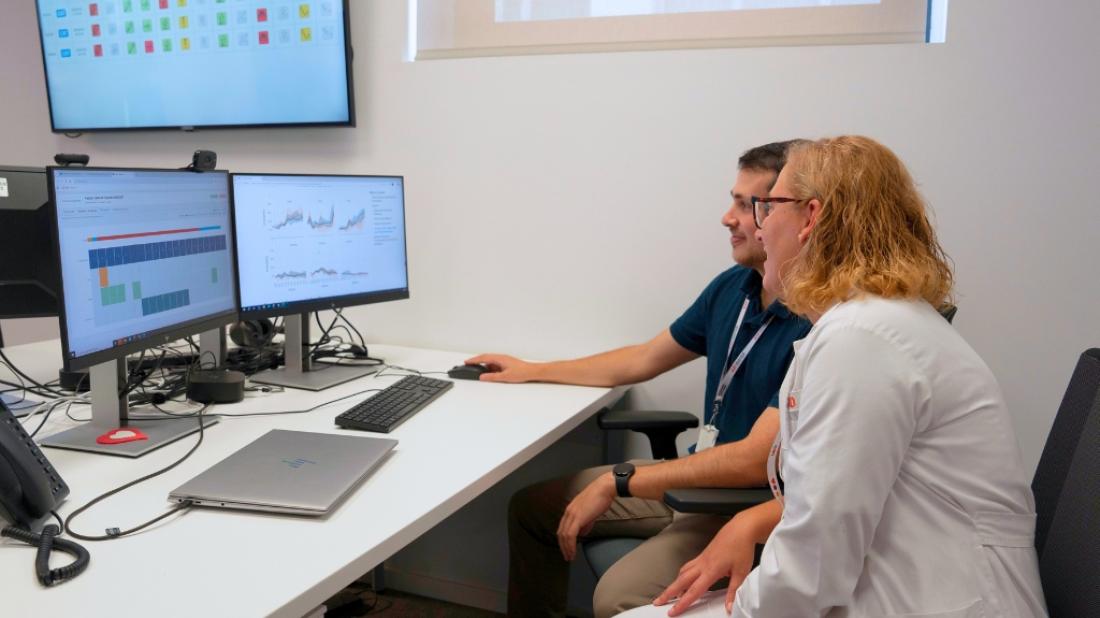
Professionals from the Paediatric Intensive Care Unit, the Department of Innovation and the Data Management Department at SJD Barcelona Children's Hospital have developed an artificial intelligence-based algorithm that can predict sepsis up to six hours before symptoms appear. At present, ICU staff have tools that allow them to detect sepsis at an early stage, but not to predict it, explains Iolanda Jordan, a paediatrician at the hospital and a researcher at the Sant Joan de Déu Research Institute. She, together with Aida Felipe, also a paediatrician and researcher at SJD Barcelona, has led the project to develop the algorithm from a medical perspective.
Sepsis is an extreme reaction of the body to an infection; it is one of the most common causes of admission to an intensive care unit and also one of the most serious complications that children admitted to this unit may experience. Given that the condition can progress very rapidly and that time is of the essence – as every hour’s delay in diagnosis and treatment can have a significant impact on the patient’s prognosis and course of the illness – the algorithm developed at SJD Barcelona is particularly valuable.
“Having a system capable of identifying risk patterns before obvious clinical signs appear can help us act more quickly: we can carry out a blood test using biomarkers and take cultures from the patient to assess whether antibiotics need to be administered,” says Felipe.
Abnormal clinical variables
To develop the predictive tool, the researchers retrospectively analysed 9,975 episodes of admission to the paediatric intensive care unit (PICU) involving 6,984 patients who were treated in the unit between 2019 and 2025. This analysis enabled them to identify, from a large volume of clinical data, around sixty clinical variables which are altered in patients who go on to develop sepsis compared with other patients admitted to the paediatric intensive care unit (PICU) and which, therefore, may act as indicators to predict its onset.
The researchers are currently carrying out a prospective evaluation of the algorithm — examining these variables in patients currently admitted to the ICU — with the aim of implementing it in the short term and on a routine basis within the unit, integrating it into existing screens, apps and alert systems.
The development of the predictive algorithm forms part of the PHEMS project, which brings together 12 leading paediatric healthcare institutions across Europe and aims to harness the potential of data to advance towards more precise, predictive and personalised medicine.
Using new technologies that enable clinical information from different European hospitals to be analysed securely—whilst always safeguarding patient privacy—the project seeks to transform the data generated during patient care into useful knowledge to improve diagnosis, anticipate complications, personalise treatments and optimise clinical decision-making.
The project will be presented this September at the Pediatric Innovation Day, which is to be held on 18 September in Helsinki and brings together hospitals, research centres and international experts in paediatric innovation. This event, co-organised by i4KIDS, provides a forum for sharing innovative solutions capable of transforming children’s healthcare through the use of data, artificial intelligence and new technologies.
Related news