Patient portal

"When we received the diagnosis, all we could think about was how our defenceless son was going to survive"
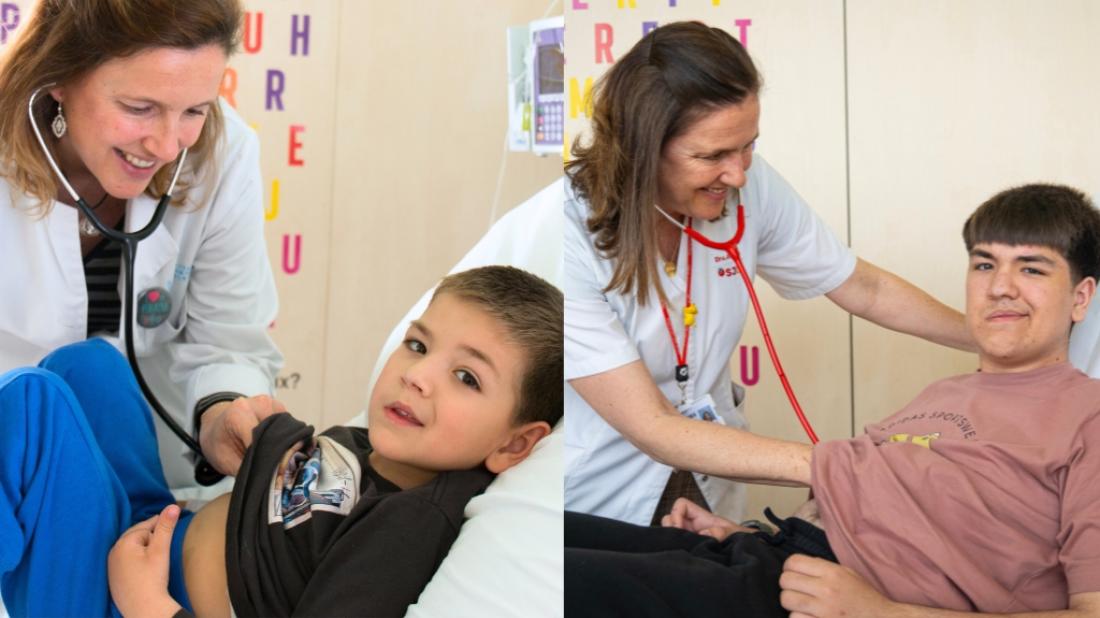
Joan now receives his immunoglobulin treatment at home independently, comfortably and safely, which allows him to lead a normal life.
Joan was born at the SJD Barcelona Children's Hospital in 2012. “He was a healthy baby and the pregnancy had been normal,” recalls his mother, Ana. At six months old, the boy developed a seemingly normal skin reaction. “We thought it was due to the antibiotics he was taking and, once it had cleared up, we didn’t give it a second thought,” says his father, Ioan. There was nothing to suggest it might be a chronic condition.
The turning point came around the age of two, during a family trip to Romania. After weaning, Joan began suffering a series of infections: ear infections, diarrhoea and high fever. Within days, his condition worsened and he developed septicaemia, a serious condition in which the body overreacts to an uncontrolled infection, causing inflammation that damages the organs.
Following this episode and numerous tests, the hospital in Romania diagnosed Joan with a primary immunodeficiency, specifically Bruton’s disease. This is a genetic condition that prevents Joan’s body from producing antibodies on its own. Ana, who is a carrier of this gene, explains that learning of this diagnosis and its causes caused them great distress: “It was a shock. All we could think about was how our son was going to live without any defences.”
Once Joan had stabilised following the septicaemia, the family returned to Barcelona and resumed treatment at the SJD Barcelona Children's Hospital with the team led by Dr Laia Alsina, Head of the Department of Allergology and Clinical Immunology, and other professionals at the centre involved in his recovery.
His parents recall that the first few months were particularly difficult. The little boy suffered lasting effects, including damage to his hands and feet and facial paralysis. As a result, he spent several months in hospital.
A lifelong treatment
Primary immunodeficiencies affect the capacity and functioning of the body’s defences. Joan’s body does not produce them and, therefore, cannot fight off infections and illnesses. The treatment for this condition involves the administration of immunoglobulins on a regular basis throughout his life.
“Every month we would come to SJD Hospital and have treatment sessions lasting up to four hours,” explains his mother. And his father adds: “We’d bring a whole load of toys, and when the doctor saw us arrive, she’d always ask Joan what he’d brought with him. That’s how we managed to pass the time in a more pleasant way.”
During the pandemic, a very difficult time for immunocompromised patients, the hospital sought a way to administer these therapies at home to avoid travel and unnecessary risks. Since then, every Monday Joan sits on his sofa for an hour whilst reading a book or playing a video game and administers the treatment himself using a subcutaneous pump.
Joan, who is now 13, remembers spending long hours in hospital receiving treatment. That’s why he now really appreciates being able to do it from home. “It’s much more comfortable and you’re not stuck in a bed for so long; I can do other things,” he says.
Although it is a chronic condition, the progress has been very positive. “Since he started treatment, he hasn’t had any serious infections or hospital admissions,” notes Ana. However, Joan’s hospital follow-up continues with check-ups every six months to adjust the dose of immunoglobulins in line with his growth.
Living a normal life
Today, Joan leads a normal life. He goes to school, is a good student and has developed his own interests. “I like aeroplanes,” he says, and would like to pursue a career in engineering. In his day-to-day life, apart from the weekly treatment and being more vigilant about fever or infections, “the rest is normal life,” sums up Ana.
Their experience with the condition led the family to become actively involved in the ACADIP association. In fact, Ioan is the secretary of the organisation, which works to raise awareness of primary immunodeficiencies, support other families and seek new treatments. For example, they want to raise awareness of the importance of plasma donation, which is essential for the production of immunoglobulin treatments. “Many people don’t donate because they don’t know they can or because they’re afraid, but it’s a simple process,” she explains.
Looking back, they recall that the hardest part was the moment of diagnosis. “The uncertainty, the fear… wondering what would become of him,” recalls his mother. “It changes your life, but you also realise what’s important,” she reflects.
Related news