Patient portal

The SJD Barcelona Children's Hospital and the Columbus Foundation launch a project to accelerate advanced therapies for ultra-rare diseases
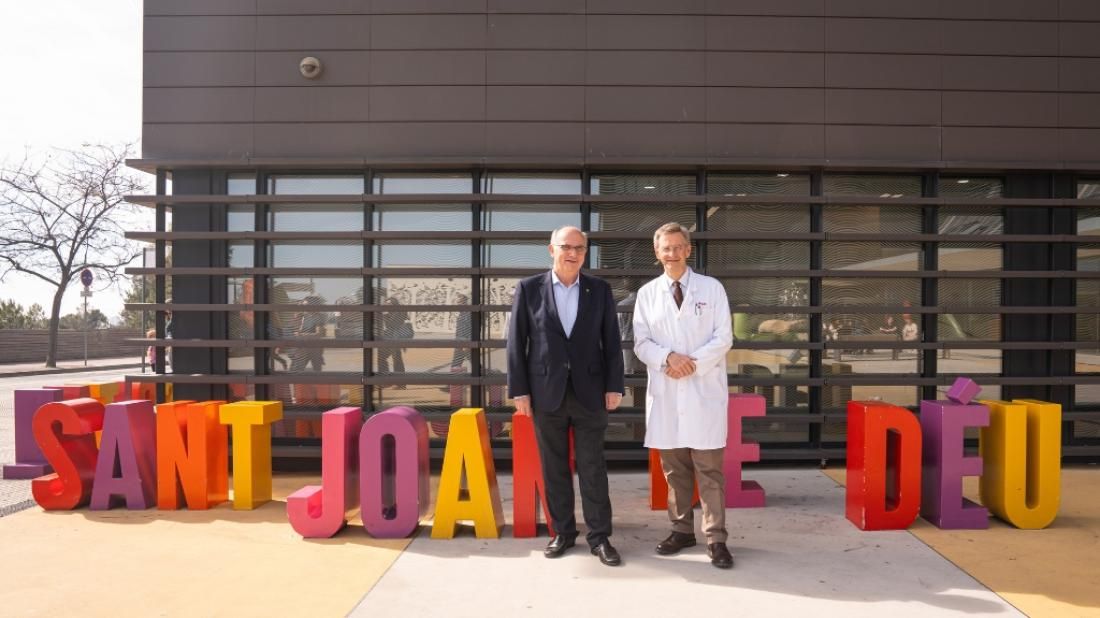
This European programme will initially focus on the SPG50, CLN7 and CMT4J diseases and plans to incorporate new therapeutic avenues in the near future.
The SJD Barcelona Children's Hospital and the Columbus Foundation have entered into a strategic partnership to promote the development of advanced therapies for ultra-rare diseases and facilitate access for European pediatric patients to therapeutic options with transformative potential.
The partnership will begin with three programmes dedicated to the SPG50, CLN7 and CMT4J diseases, with the aim of building a sustainable and replicable model for diseases with high medical need and little to no commercial interest. Within this framework, the SJD Barcelona Children's Hospital will care for and treat affected European pediatric patients, while the Columbus Foundation, in collaboration with the US-based company Elpida Therapeutics—which operates as a non-profit organisation—will coordinate the areas of clinical development, regulatory strategy and production necessary to move towards registrable therapies.
Miquel Pons, Deputy Director of the SJD Barcelona Children's Hospital, emphasises: 'We have a long-standing commitment to children and to clinical innovation. This collaboration strengthens our ability to administer and monitor advanced therapies and to contribute to rigorous, patient-centred therapeutic development.'
A scalable platform
The Columbus Foundation anticipates a tangible leap forward in 2026-2027 in attracting and developing therapies for children with ultra-rare diseases, supported by new clinical administration and monitoring capabilities at the Hospital and the consolidation of a working model that makes these projects viable and scalable.
In very rare diseases, the critical factor is not only science, but the coordination of all elements: patient identification, clinical governance, manufacturing and quality control, interaction with regulators and organisation of network access. This collaboration was created to fill that specific gap and turn real therapeutic opportunities into administered treatments.
From the United States, Terry Pirovolakis, founder and CEO of Elpida Therapeutics, states: 'This agreement represents the kind of transatlantic cooperation needed to turn cutting-edge science into real therapies, with a clinical, regulatory and manufacturing strategy aligned from the outset.'
The collaboration begins with three ultra-rare disease programmes (SPG50, CLN7 and CMT4J) and will continue with other programmes, such as the rare disease CTNNB1, in collaboration with the CTNNB1 Foundation in Slovenia and the Spanish CTNNB1 Association.
A sustainable model
The joint objective is to make the development of therapies for ultra-rare diseases viable in the long term, not only for these purposes, but as a platform for many other pathologies that currently have no feasible development programme.
To turn these opportunities into administered treatments, the SJD Barcelona Children's Hospital and Columbus Foundation are structuring a 2026-2027 financing plan aimed at covering clinical and monitoring costs, enabling production batches when necessary, and ensuring clinical, regulatory, and quality coordination capacity. In doing so, both entities aim to consolidate a model that combines clinical excellence, economic sustainability and international cooperation in the service of pediatric patients with ultra-rare diseases.
'The challenge with ultra-rare diseases is not only scientific, but also has to do with sustainable development. With this partnership, we want to forge a path that allows us to reach patients and, at the same time, create a mechanism to finance future projects', says Javier García, founder and secretary of the Columbus Foundation.
Related news