Patient portal

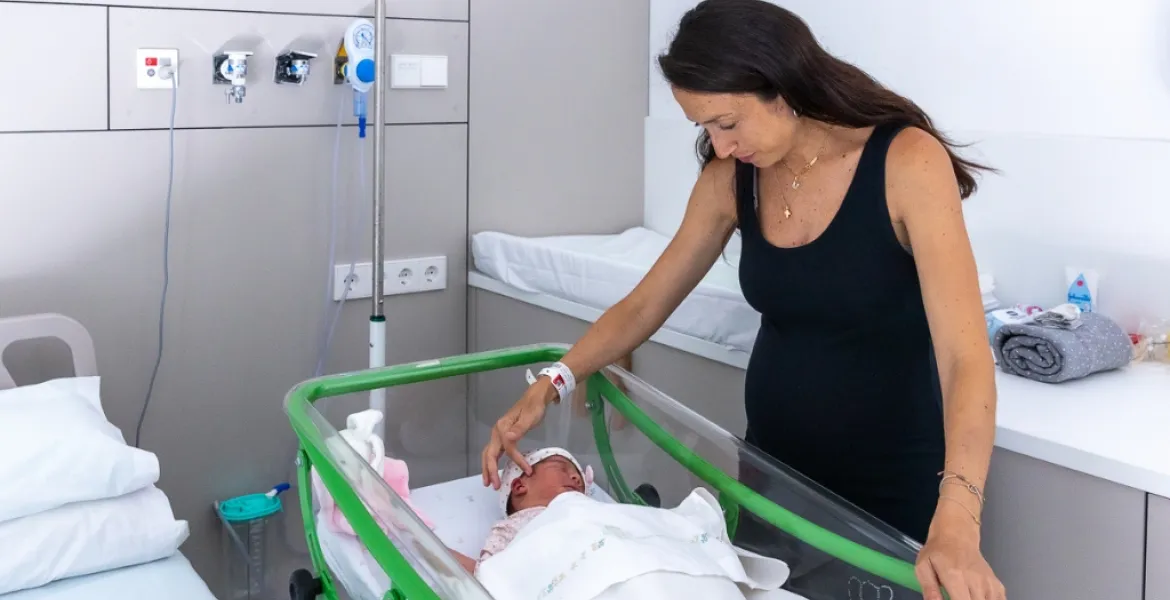
Our main aim is for you to feel comfortable and to share one of the best moments of your life with us and your family. Below, we’ll explain the different stages of labour at Sant Joan de Déu Barcelona Hospital.
Arrival at the hospital to give birth
Keep an eye out for the following signs:
When contractions are regular and intense, occurring every five minutes or less, for at least two hours. If this is not your first birth, come in when contractions are occurring every five minutes for one hour.
If you have heavy vaginal bleeding; persistent abdominal pain or a decrease in foetal movements; a headache or high blood pressure (above 140/90 mmHg), you should come to A&E.
If your waters break and the fluid is not clear, if you have any doubts, or if the result of the vaginorectal swab is positive for Group B Streptococcus agalactiae, come to the hospital. However, if your waters break and the fluid is clear, you can feel the baby moving and the result of the vaginorectal swab is negative, you can wait up to 12 hours for contractions to start. In this second case, you can join the ‘Wait’ programme.
‘Wait and See’ is a management programme for premature rupture of membranes in women with low-risk pregnancies where contractions have not yet begun, allowing a 24-hour wait for labour to start spontaneously.
You may be eligible for this programme if:
- Your waters are clear.
- You feel foetal movements.
- Your vaginorectal swab is negative for Group B Streptococcus agalactiae.
- Your pregnancy is classified as low-risk.
If you opt into this programme, once you arrive at A&E and we confirm that you meet the criteria, we will carry out a cardiotocography (CTG) and an obstetric assessment via a vaginal examination. We will also take your vital signs (temperature, blood pressure and heart rate).
If everything is normal, we will give you the option of returning home and waiting for up to 24 hours after your waters break for labour to start spontaneously. We’ll give you a contact number so you can get in touch if you have any questions, and we’ll arrange a date and time for you to be admitted if labour hasn’t started within this time.
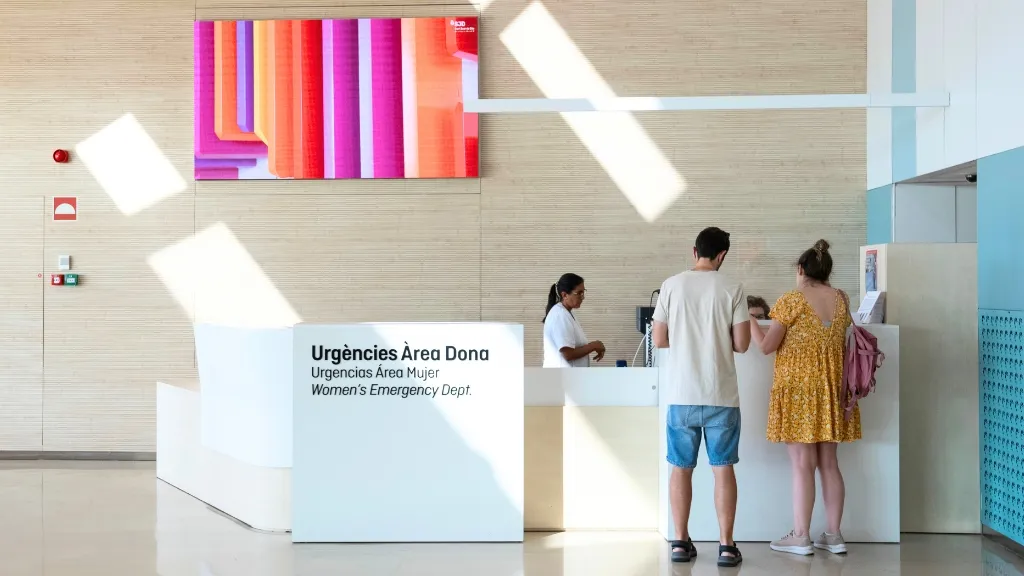
You should enter via Passeig Sant Joan de Déu, 2, 08950 Esplugues de Llobregat, through Block A (Women’s Department).
If you enter via the main lobby, you will find the Women’s Health A&E desk on your left.
If you enter via the car park, you will see markings on the floor guiding you to the same Women’s Health A&E desk.
Once at the hospital, the healthcare staff attending to you will review your medical records, listen to the baby’s heart rate and carry out a vaginal examination to determine whether labour has already begun or is still in the preparatory phase. If the time has come, labour will be induced.
As the time of delivery approaches, it is a good idea to pack a bag with the essentials for your stay in hospital, the length of which will depend on whether you have a natural birth or a caesarean section. It is also important to bring all the necessary documentation and any items your companion will need.
To help you get ready, you can download our guide.
Vaginal delivery
A normal birth begins spontaneously and progresses and concludes without complications, culminating in the birth of the baby. It does not involve any intervention beyond comprehensive and respectful support during labour.
All low-risk pregnant women who wish to do so can receive natural childbirth support. The protocol is presented at the primary care centre, and a visit is made to the hospital with the midwife to agree on the entire process leading up to the birth and to discuss the birth plan.
Below, we explain the entire labour process in detail and share videos so that you can visualise the information more clearly.
During the pre-labour, labour and post-labour periods, it is advisable to have a trusted person with you. This can help to reduce anxiety, fear and the need to resort to medication to relieve pain. At Sant Joan de Déu, you can be accompanied by the person of your choice throughout the entire process.
Physical space, support and comfort
During the pre-labour, labour and post-labour periods, it is advisable to have a trusted person with you. This can help to reduce anxiety, fear and the need for pharmacological pain relief. At Sant Joan de Déu, you can be accompanied by the person of your choice throughout the entire process. If, in the event of a life-threatening emergency, the team of healthcare professionals does not consider their presence appropriate, they will explain this to you in advance.
We also foster the peaceful, calm atmosphere that childbirth requires and respect your privacy. We have modern, welcoming spaces for labour and delivery, so you won’t need to move to a different room. We can also provide accessories such as birthing balls, mirrors, music, showers and a bath.
We will provide you with a hospital nightdress once your admission is confirmed, although if you prefer, you may wear your own clothes during labour, avoiding items with metal fastenings, such as bra hooks.
During labour, and to ensure your privacy, we will endeavour to ensure that only essential staff are present. As Sant Joan de Déu is a teaching hospital, it is possible that healthcare professionals in training may be present during labour; they will always act under the necessary supervision. Furthermore, the healthcare professionals attending to you will introduce themselves and provide their identification.
The spaces
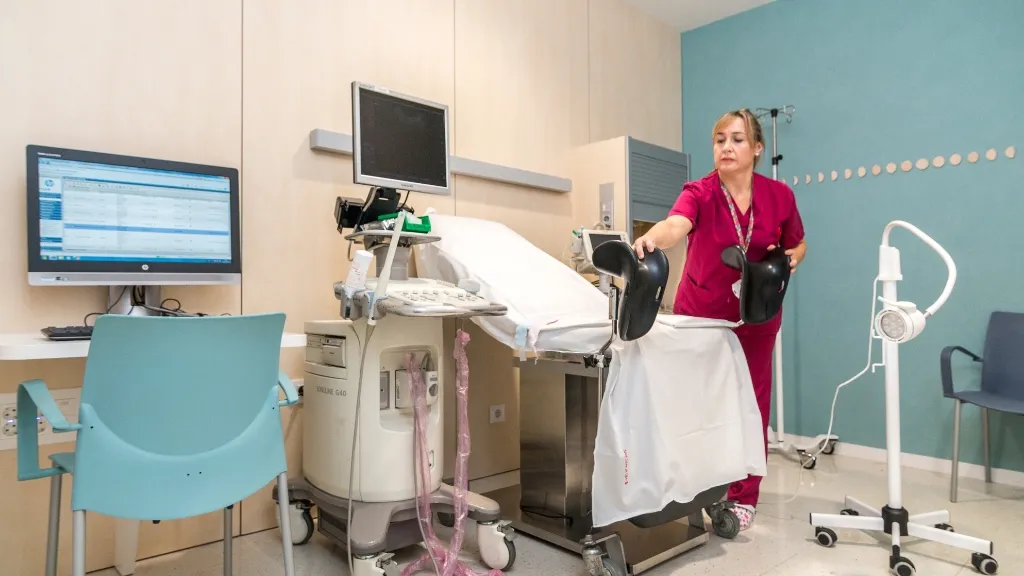
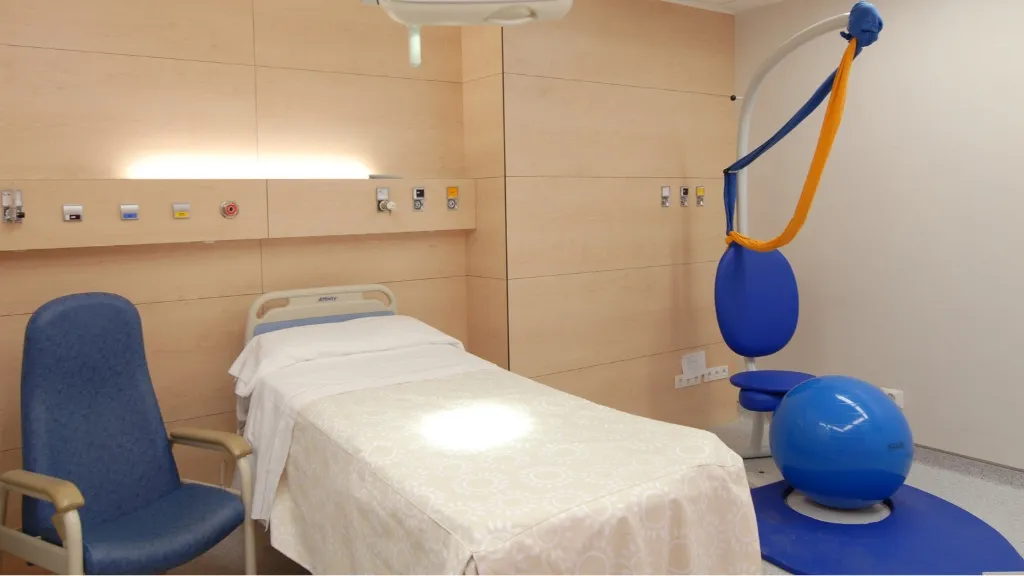
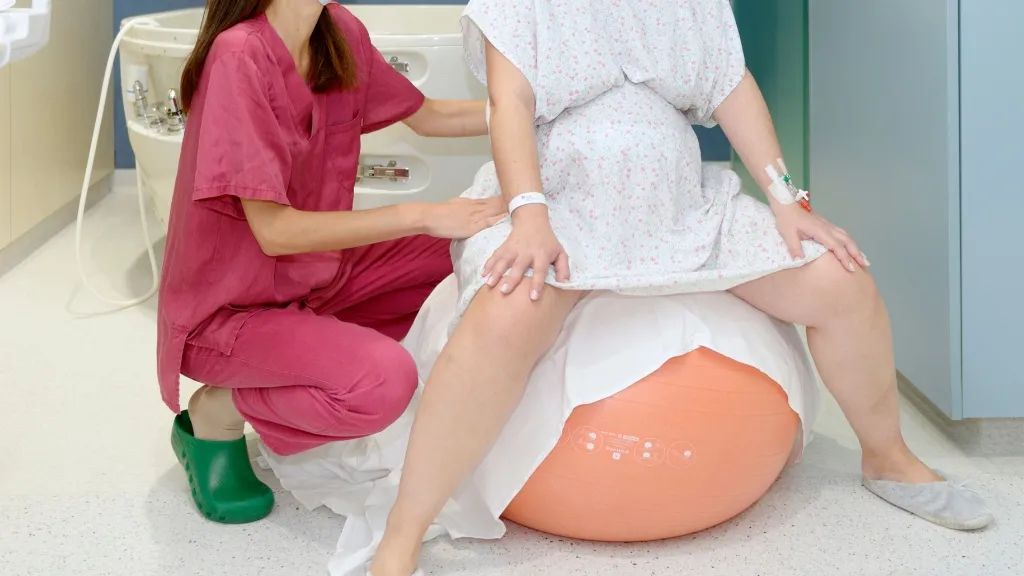
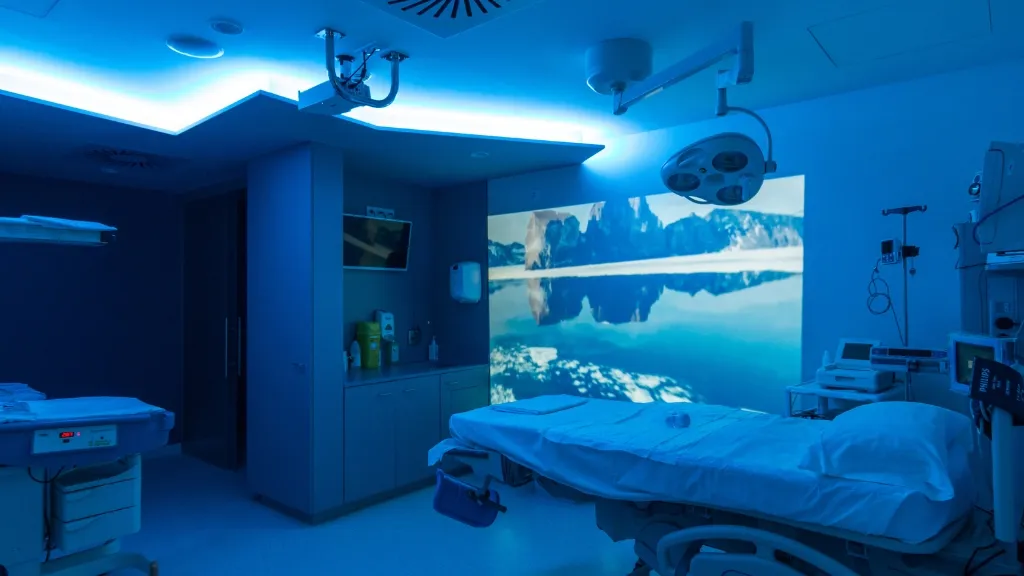
When labour begins, you will be taken to the delivery room. The dilation stage is the first stage of labour, during which the cervix dilates to 10 cm.
Labour
When labour begins, you will be taken to the delivery room. The dilation stage is the first stage of labour, during which the cervix dilates to 10 cm.
Eating and drinking
During the dilation process, you can eat and drink as normal; we recommend that you have light meals to aid digestion (toast, herbal teas, nuts, etc.).
If you’d like an epidural, we may need to restrict your food intake, but you’ll still be able to drink clear liquids (apple juice, isotonic drinks, water, etc.).
Positions and movement
Movement is considered essential to aid dilation and the progress of labour. At Sant Joan de Déu Hospital, we encourage mobility during dilation and the second stage of labour. You can adopt whatever positions make you feel most comfortable.
Peripheral venous line
The insertion of a peripheral venous line may be waived if your pregnancy is considered low-risk, the foetal heart rate is normal, and you wish to give birth without an epidural. You will need to sign a document which we will provide.
If complications arise during labour and/or the administration of medication is necessary, we will inform you and recommend the insertion of an intravenous line.
If your pregnancy is high-risk or you wish to have an epidural, an intravenous line will be required.
Monitoring foetal well-being
Monitoring the baby’s well-being is necessary during labour. The baby’s heart rate is monitored using a cardiotocography (CTG) machine. This can be carried out intermittently or continuously, depending on the stage of labour, the risk associated with the pregnancy and the judgement of the healthcare professional assessing the baby’s well-being.
In some of our delivery rooms, we have a wireless monitoring device to allow for greater mobility.
Pain management
We offer a range of options to help relieve labour pain.
Non-pharmacological treatments
- Birthing balls, mattresses, birthing chairs, local heat, shower and/or bath.
- You can also bring items from home for complementary therapies to help you relax and manage pain, such as: aromatherapy, homeopathy, Bach flower remedies, transcutaneous electrical nerve stimulation (TENS) or your favourite music.
Pharmacological treatments
- We have nitrous oxide available, which is an inhaled painkiller that you can request at any time. It takes effect in under a minute, does not affect the baby and does not interfere with the physiology of labour.
- Epidural analgesia, where you can choose between the standard dose or low-dose epidural analgesia (‘walking epidural’). The latter will allow you to move freely during dilation and adopt a variety of positions during the birth. Should the pain become more intense, you may opt for a standard-dose epidural, in which case we will adjust your position on the bed, as this involves greater motor blockage of the legs compared to the low-dose option.
Once you are fully dilated, you enter the second stage of labour: the expulsion stage. At this point, we will give you a mirror so that you can watch the birth.
Expulsive stage: pushing and the birth of the baby
Once you are fully dilated, you enter the second stage of labour: the expulsion stage. At that point, we will give you a mirror so that you can watch the birth.
- During a natural birth, the pushing required to deliver the baby will occur when the woman feels the urge to do so and is fully dilated.
- During births under epidural anaesthesia, sensitivity and the urge to push may be reduced, so it may be helpful for us to guide you through the process.
As we do not routinely perform episiotomies, the midwife or obstetrician will offer to apply local heat to this area to minimise the risk of perineal injury.
Finally, if you wish, we will offer you the chance to hold your baby immediately after the second stage of labour.
Clamping the umbilical cord
Once the baby has been born, and provided there are no complications and you wish to do so, we will wait before clamping and cutting the umbilical cord. Waiting for more than a minute, or until the cord stops pulsating, increases the volume of blood the baby receives, which can help prevent physiological anaemia in the newborn and boost iron stores.
If you wish to donate umbilical cord blood, we always wait one minute after the birth to clamp the cord and collect the remaining blood. This procedure is carried out whilst the baby is in skin-to-skin contact with the mother.
Skin-to-skin contact
Skin-to-skin contact immediately after birth promotes bonding and mutual recognition, prevents heat loss and helps to initiate breastfeeding.
During the first two hours after the birth, you will remain in the delivery room, enjoying skin-to-skin contact with your baby.
Some of the benefits of skin-to-skin contact include: the baby adapts better (breathing, circulation, temperature and blood sugar levels) and the mother experiences less postnatal bleeding due to increased levels of oxytocin.
Following the birth, the placenta is delivered. This stage coincides with skin-to-skin contact and with the method of clamping the umbilical cord that you have chosen.
Delivery of the placenta
After the birth, the placenta is delivered. This stage coincides with skin-to-skin contact and with the method of clamping the umbilical cord that you have chosen.
The expulsion of the placenta, or spontaneous delivery (without medication), is associated with an increased risk of postpartum haemorrhage. For this reason, our hospital’s protocol for postpartum haemorrhage recommends guided delivery of the placenta with the administration of a low dose of oxytocin intravenously or intramuscularly, to facilitate the delivery of the placenta and reduce the risk of haemorrhage. This procedure is endorsed by the WHO and other scientific societies.
If you wish to take the placenta home with you, you may do so after signing an informed consent form. You will need to bring a container for transport, as well as a cool box or ice packs to keep it cool.
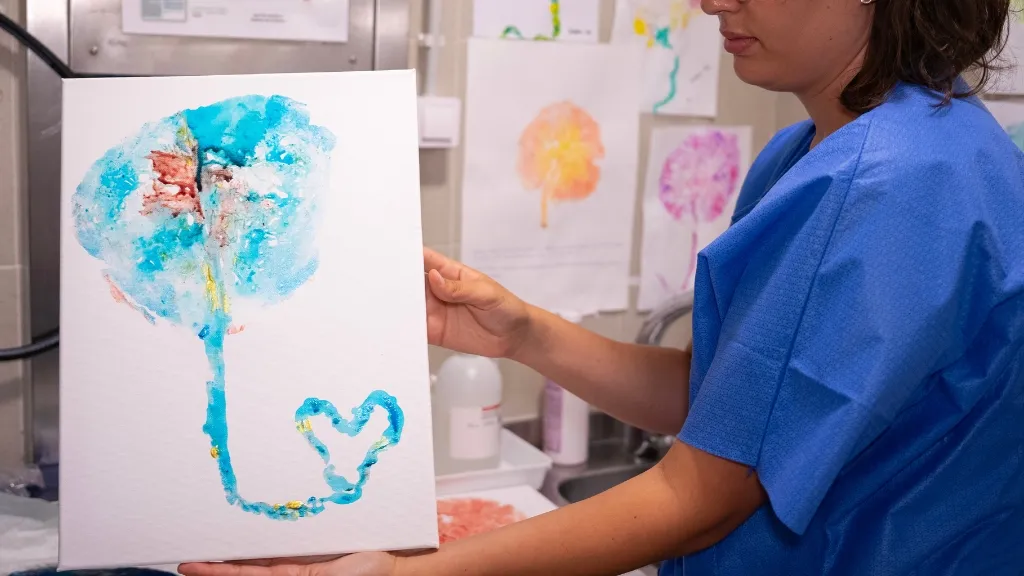
Do you know what a placenta print is?
A placenta print involves applying one or more colours of paint, or the blood itself, to the placenta and the umbilical cord, so that when a sheet of paper is placed on top, an outline resembling a tree is produced.
If you’d like us to create a placenta print as a memento of this organ, which is essential for life in the womb, you’ll need to bring the fabric or card on which you’d like us to make the print (the minimum size is A4) as well as the acrylic or watercolour paints.
Umbilical cord donation
Umbilical cord blood contains stem cells capable of generating blood cells to treat very serious conditions such as leukaemia, immunodeficiencies and other types of cancer. Through your selfless donation, you will help save the lives of children and adults.
Sant Joan de Déu Barcelona Hospital is one of the maternity hospitals where you can donate both the umbilical cord and the placenta together.

Caesarean section
A caesarean section is a major surgical procedure that poses a greater risk to a woman’s health than a vaginal birth. However, there are sometimes situations in which a caesarean section becomes the safest and most necessary way to bring the birth to a conclusion for the woman or the baby. There are three types of caesarean section:
* Elective or planned caesarean section: this is carried out on women with medical conditions affecting themselves or their babies that contraindicate or make vaginal delivery inadvisable. It is a scheduled procedure
.* Caesarean section during labour: this is carried out due to various problems arising during the labour process (stalled dilation, failure of the baby to descend, etc.).
* Emergency caesarean section: this is carried out in the event of a sudden emergency during labour.
During the caesarean section, a midwife will be with you at all times. In addition, the person of your choice may also be present during the procedure.
At the moment of birth, if you wish and circumstances permit, we will lower the curtain so that you can witness the birth. We will clamp the umbilical cord, ensuring the ‘first minute’ if the situation allows.
We encourage family bonding and the initiation of skin-to-skin contact, if possible with the mother and, if not, with the person accompanying her.
Hospital stay
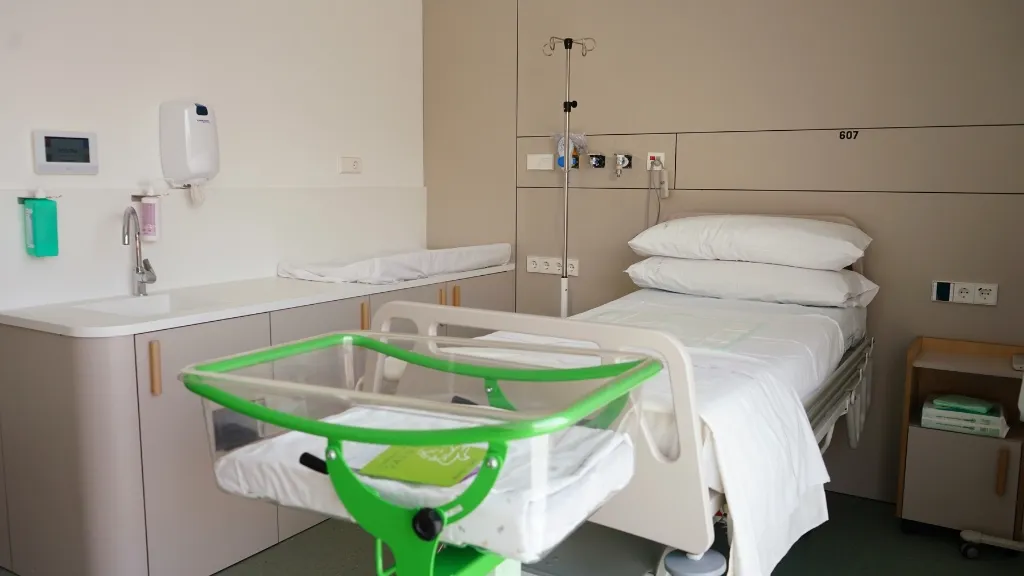
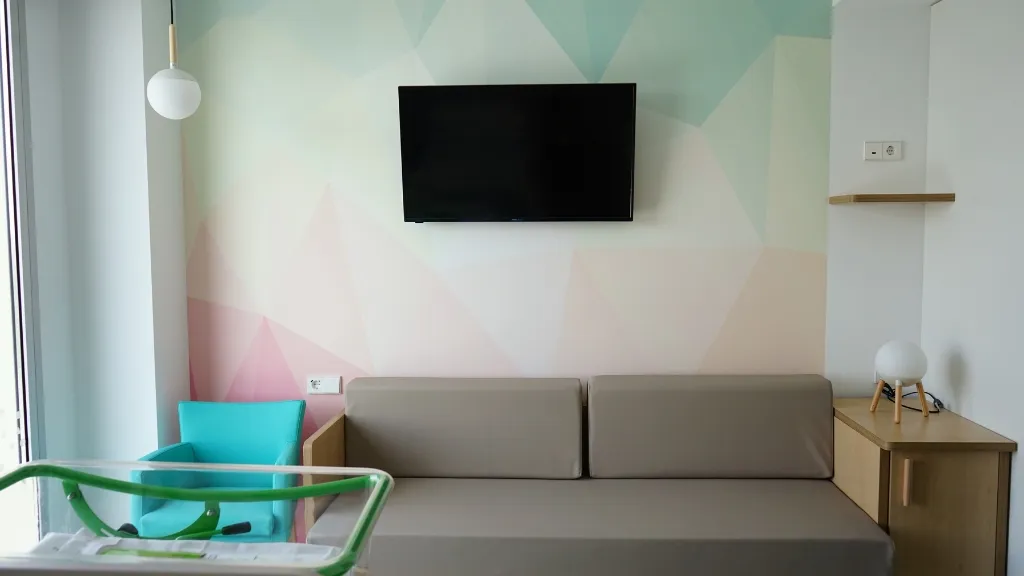
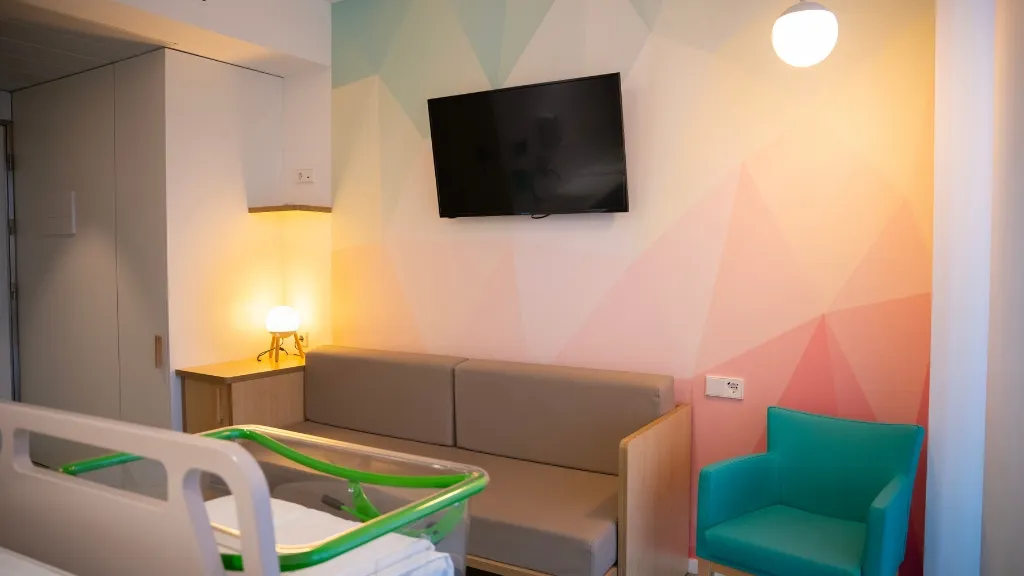
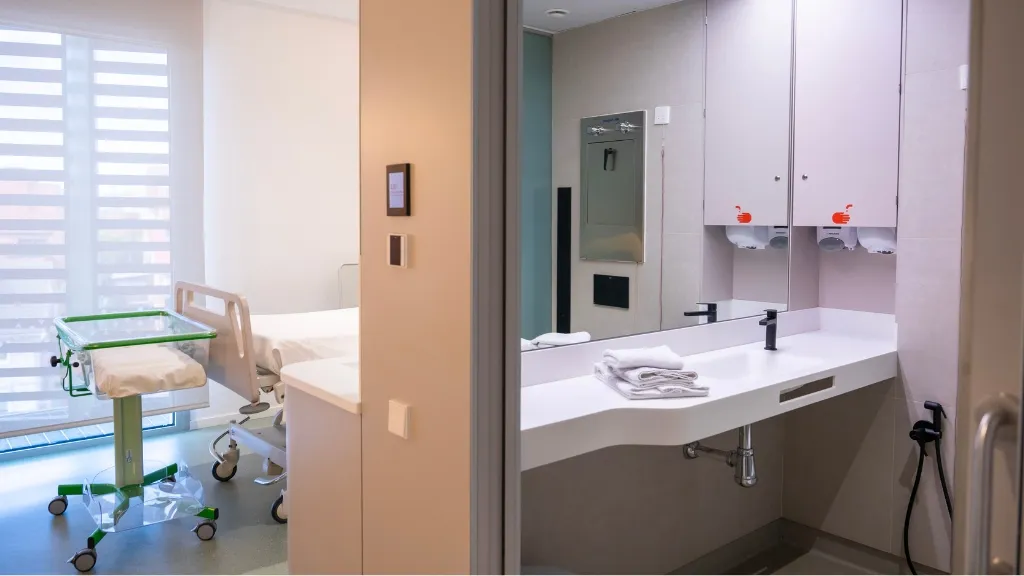
98 per cent of our hospital rooms are single rooms and have been recently refurbished. They are equipped with a sofa bed for a companion and an accessible bathroom. Please note that we do not provide sheets, pillows or blankets for companions; you may bring these from home if you feel it is necessary. Alternatively, you can purchase the relevant ticket from the vending machines located next to the A&E desk in the Women’s Health Department, and we will provide you with bed linen.
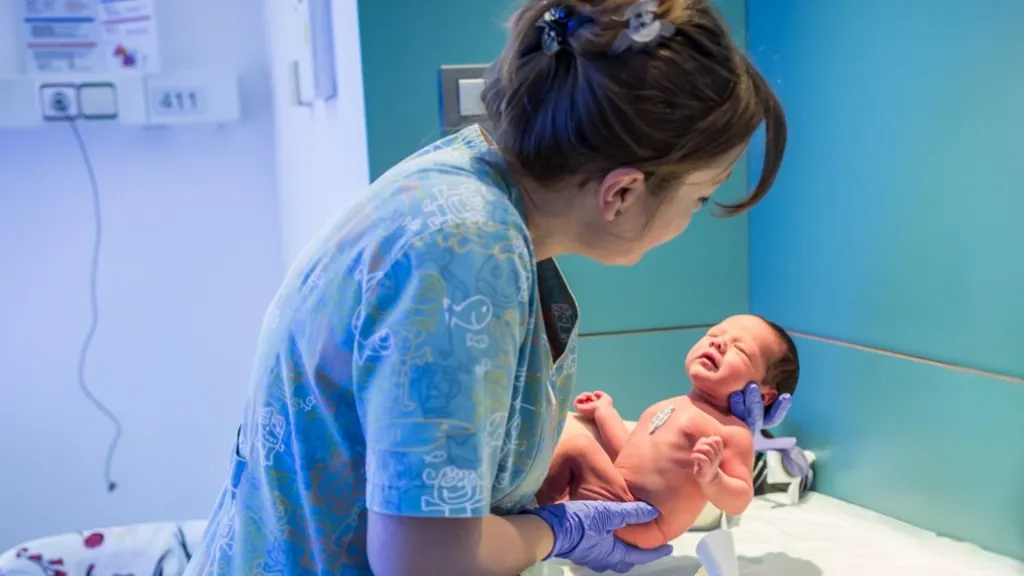
As for care for the newborn, this will be provided once you have left the delivery room or the recovery room (in the case of a caesarean section). This care includes weighing and measuring the baby, administering vitamin K and antibiotic eye drops. Once in your room, you will find an area specially set up for caring for your baby, in line with our philosophy of keeping your baby by your side at all times.
During your stay at the hospital, we will encourage the mother-baby bond, which means we will never separate your baby from you. All care and check-ups will take place in the same room.
This is what our rooms are like
The hospital is open to families 24 hours a day
At the hospital, we do not restrict visits to specific time slots, so you can receive visitors whenever you wish. We are open 24 hours a day, both in the inpatient ward and in the neonatal intensive care unit, with the aim of encouraging contact between mothers and fathers and their newborns at all times.
Have you heard of the mother-and-baby home hospitalisation programme (HDOM)?
Our aim is to improve the quality of the entire process, ensuring safety for both you and your baby, whilst offering the comforts of being at home.
Provided there are no contraindications, if you wish to do so and meet the programme’s inclusion criteria, you can return home 12 hours after giving birth, and a midwife will visit you at home 24–48 hours after the birth.

Breastfeeding
During your stay at Sant Joan de Déu Barcelona Hospital, we will help you to start breastfeeding, wherever possible and if you wish to do so.
Although it is a natural process, it is a skill that is learnt. The success of breastfeeding depends on several factors, one of the most important being the correct technique. We will be there to guide you as you learn how to breastfeed your baby.
If you have decided to feed your baby with formula, or find yourself in a situation where you are unable to breastfeed, you should know that you can feed your baby with just as much affection, love and physical contact as you would when breastfeeding.
Everything you need to know about breastfeeding
The Women’s Department at Sant Joan de Déu Hospital has put together this information pack on breastfeeding. You’ll find information on breastfeeding techniques, frequently asked questions, formula feeding and a video of a webinar presented by our midwives.

Neonatal ICU
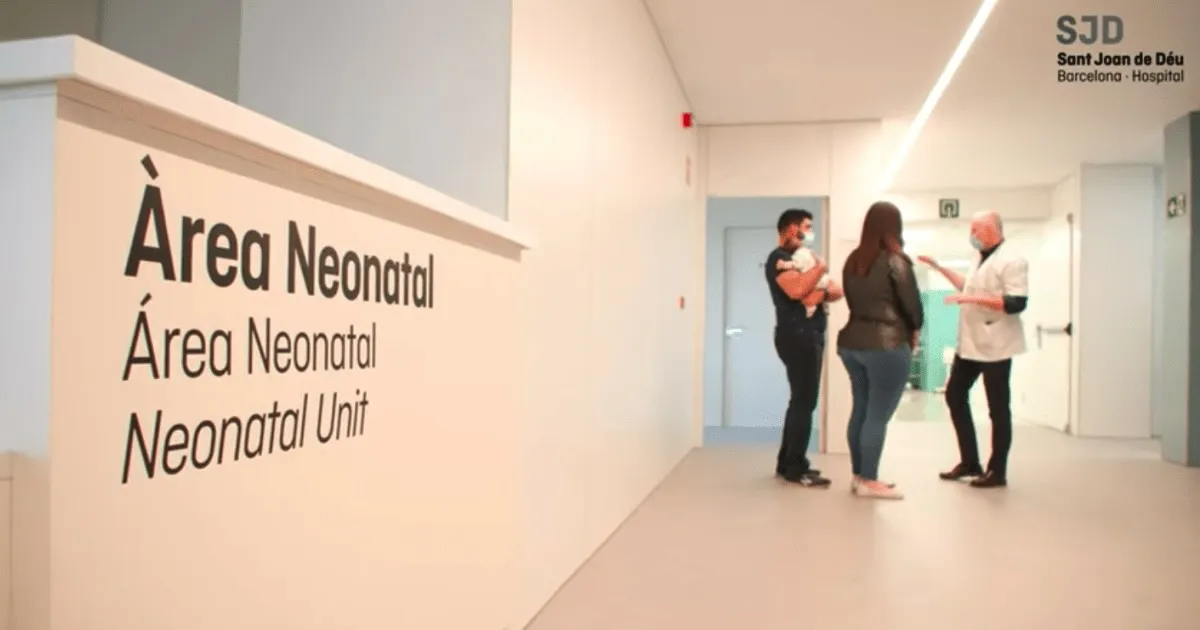
In the event of complications during pregnancy or childbirth, or whenever necessary, the Neonatal Intensive Care Unit (NICU) at Sant Joan de Déu Barcelona Hospital will look after you and your baby. Every year, around 600 babies are treated in the NICU, either born at the hospital or referred from other centres because they were born prematurely or have health problems requiring special care.
The NICU has private rooms, some of which are equipped to accommodate multiple births and others that can be converted into operating theatres to deal with any situation. All are designed to facilitate the presence of mothers and fathers and their involvement in their child’s care, promoting skin-to-skin contact, the kangaroo care method and breastfeeding.
Find out more about our UCIN