Patient portal

BCNatal’s fetaLife project for the most critically premature babies achieves 21 days’ survival in a sheep model in a liquid incubator
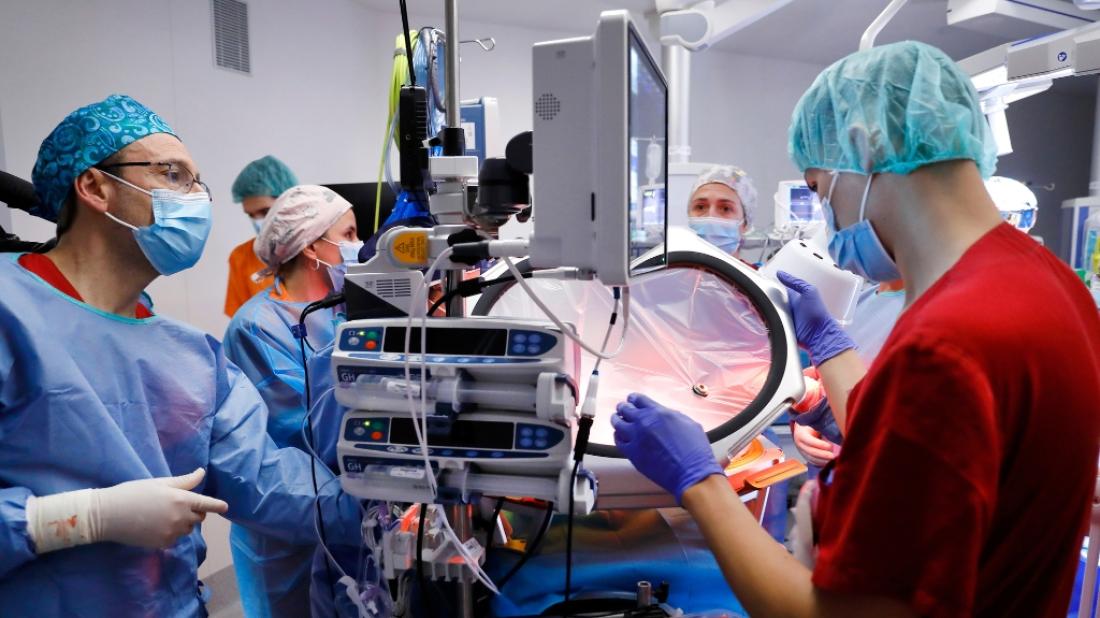
Postnatal survival of more than 13 months has also been achieved, with good neurodevelopmental outcomes following treatment in the liquid incubator.
After more than five years of work, the scientific team behind the fetaLife project for extremely preterm infants has developed a functional prototype of an artificial placenta, or liquid incubator, which has achieved 21 days of survival in good condition in an experimental sheep model. Furthermore, postnatal survival of more than 13 months has been achieved, with good neurodevelopmental outcomes following time spent in the liquid incubator.
This marks a milestone in this highly complex scientific project led by BCNatal, a national and international centre of excellence in maternal-foetal medicine at SJD Barcelona Children's Hospital and Hospital Clínic. The research has been funded by the ”la Caixa” Foundation with 7.65 million euros. Its aim is to increase survival rates and, above all, to reduce the serious long-term effects that affect the majority of the most extremely premature newborns – that is, those born at six months or earlier.
The managing director of SJD Barcelona Children's Hospital, Miquel Pons; the director general of Hospital Clínic Barcelona, Josep Maria Campistol; the Deputy Director-General for Research and Grants at the ”la Caixa” Foundation, Àngel Font; the Director of BCNatal and leader of the fetaLife project, and Professor at the Faculty of Medicine and Health Sciences at the Universitat de Barcelona (UB), Eduard Gratacós, and the medical and scientific coordinator of BCNatal’s fetaLife project, Elisenda Eixarch, have presented the initial results of Europe’s first experimental artificial placenta project.
How a liquid placenta works
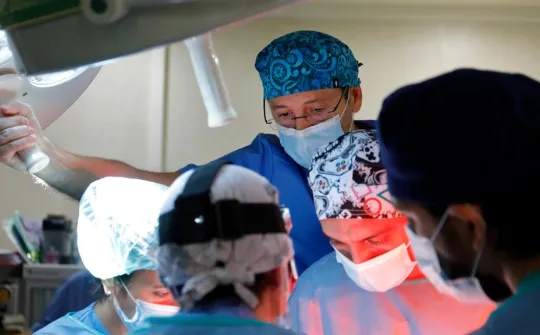
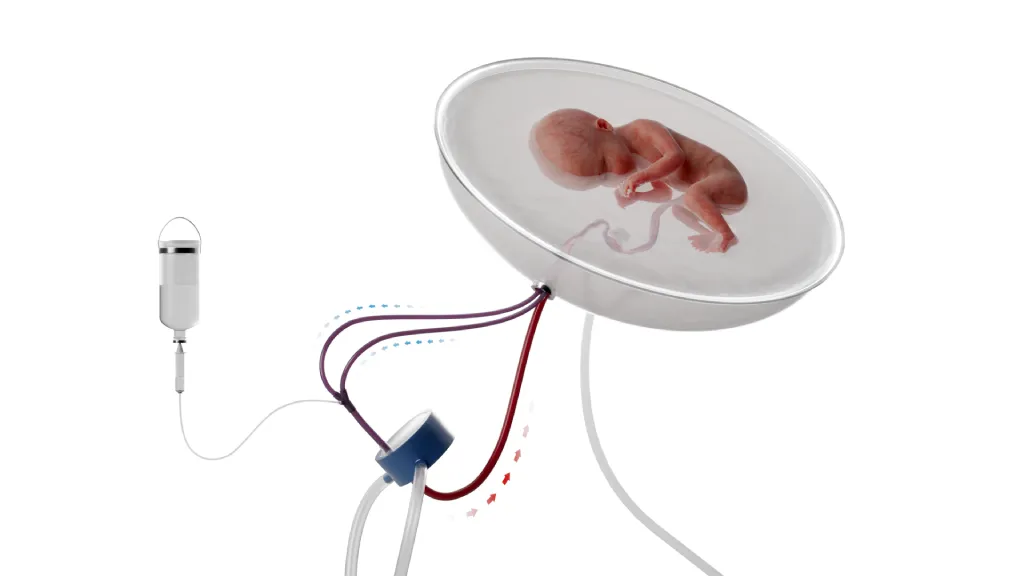
A liquid incubator is a system in which a very preterm baby can live in a way that resembles life in the womb, offering a more natural solution. The prototype developed by BCNatal, of which several versions have already been produced, features a liquid environment and allows the premature baby to continue developing whilst connected to an extracorporeal circulation system via its umbilical cord.
Technological improvements and major advances in medical support protocols — which include the administration of nutrition, hormones and other medications, and which anticipate possible clinical scenarios and the medical interventions required to address them — have led to improved survival rates within the system and a successful neonatal transition in sheep. This transition simulates the steps envisaged for its future application in humans: transfer from the liquid incubator to a conventional incubator once the organs have matured.
The system’s own monitoring system remains key, enabling the medical team to carry out continuous remote monitoring in order to maintain close control over the foetus’s condition and development. Another major advance achieved to date has been the improvement of the extracorporeal circulation system, comprising an oxygenating membrane and a set of components (tubing and cannulas) that have been specifically designed to facilitate blood circulation and oxygenation, simulating the natural process that occurs in the womb via the maternal placenta and the umbilical cord.
Experimental validation phase to bridge the gap to clinical practice
Using a sheep model, the team has so far designed and described the surgical techniques and protocols required to carry out a transition from the uterus to a prototype liquid incubator without incident, and has achieved a survival rate of 21 days within the system.
A significant step has been taken towards bringing the system closer to clinical application: verifying that the neonatal transition is possible. The neonatal transition is a process similar to the ‘birth’ of the foetus, in which it moves from the liquid incubator to extrauterine life and begins to use its lungs like any newborn. The project has carried out trials that have resulted in viable lambs following their time in the liquid incubator. In one specific case, that of the ewe Gaia, who is now over a year old, long-term neurodevelopment has been studied and normal results have been obtained.
Since its inception in 2021, the project has had its own committee to address ethical, social and safety issues, on which the families of the newborns are represented. The ethical aspects involved in transferring the system for use in humans are led by the Borja Institute of Bioethics, with which the project’s research team works in collaboration.
The project has been reviewed and favourably assessed on two occasions by a panel of internationally renowned experts in foetal and neonatal medicine from five countries.
Following these results, fetaLife Technologies was established in 2025 as a spin-off company from SJD Barcelona Children's Hospital, Hospital Clínic and the Universitat de Barcelona, with the aim of bringing the technology into clinical practice. Over the coming year, the project team will focus its efforts on introducing a technological improvement, in collaboration with industry, to adapt the system for use in humans, as well as on initiating the ethical and legal preparations to enable the approval of a first human trial, scheduled for 2028–2029, with the necessary investment. Further funders are expected to come on board for this new phase. For its part, the “la Caixa” Foundation has already announced that it will continue to support the project, which has also received donations from other organisations.

A groundbreaking solution to save the lives of premature babies
Although more than 90 % of pregnancies reach full term without complications, foetal life remains one of the most important stages in human development. One of the main problems yet to be resolved is extreme prematurity (six months or less), a condition that affects 25,000 families every year in Europe alone. Survival rates for extremely preterm babies, even in specialist units, are low (between 25 and 75 per cent), and a significant proportion of survivors suffer from serious, lifelong complications.
Before six months’ gestation, the foetus’s lungs, intestines and brain are underdeveloped and not ready to function properly. An extremely preterm newborn is, in reality, a foetus that must survive in a highly unnatural environment. Weighing less than 1,000 grams, these newborns require respiratory support and intravenous feeding to stay alive, but this can lead to complications and have an impact on their future lives. For this reason, the liquid incubator may be a solution that improves the quality of life for these newborns.
The research group led by Dr Gratacós is highly interdisciplinary and involves the direct participation of more than 35 researchers from different disciplines —various medical specialities, biology, engineering and nursing— as well as the collaboration of a further 35 professionals, although at certain stages the project has involved as many as 150 people.
In addition to BCNatal’s fetaLife project, there are currently only four groups in the world — one in Philadelphia and another in Michigan (United States), a consortium between Australia and Japan, and another in Toronto (Canada) — that have developed similar experimental models and made significant progress in recent years.

Related news