Patient portal

First laser ablation for isolation of the posterior quadrant of the brain in a young man with refractory epilepsy
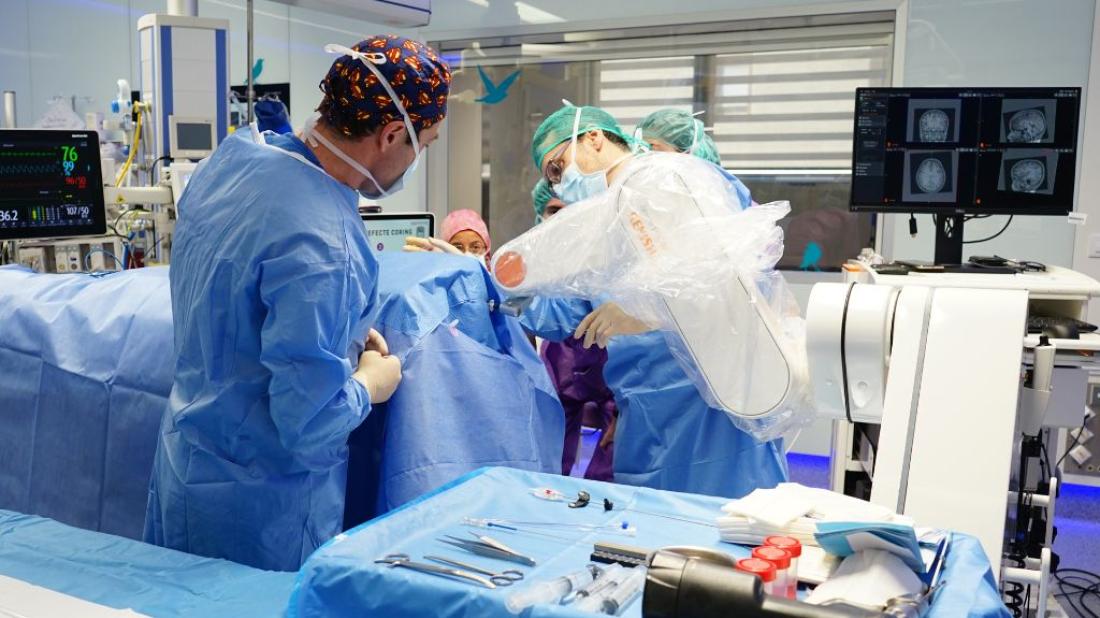
The SJD Barcelona Children's Hospital is the first hospital in Spain to use this technique as an alternative to craniotomy to disconnect this area from the rest of the brain.
SJD Barcelona Children's Hospital is the first hospital in Spain to use laser ablation to operate on children and adolescents with refractory epilepsy affecting a large area of the brain located in the posterior quadrant. Using this technique, called temporo-parieto-occipital (TPO) disconnection, surgeons are able to isolate the affected area and disconnect it from the rest of the brain.
This technique is less invasive and safer than traditional craniotomy surgery (involving opening the skull) because it allows patients to recover more quickly and return home within 72 hours. With traditional surgery, the hospital stay is eight days. In addition, laser surgery, being less invasive, causes less cosmetic damage to the patient.
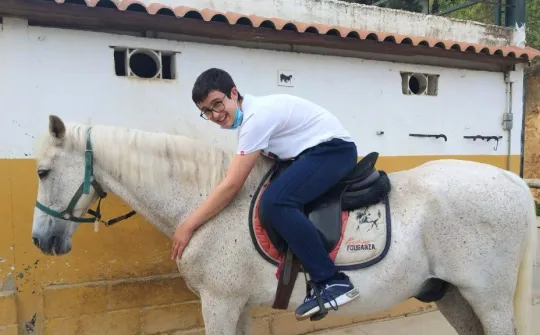
The centre has already performed two such operations. The first, in March 2022, was on a 14-year-old teenager with daily epileptic seizures due to a cerebral infarction he suffered early in life. Since the operation, he has had no seizures and the medical team treating him has even been able to reduce his medication.
What does temporo-parieto-occipital disconnection or TPO with laser ablation involve?
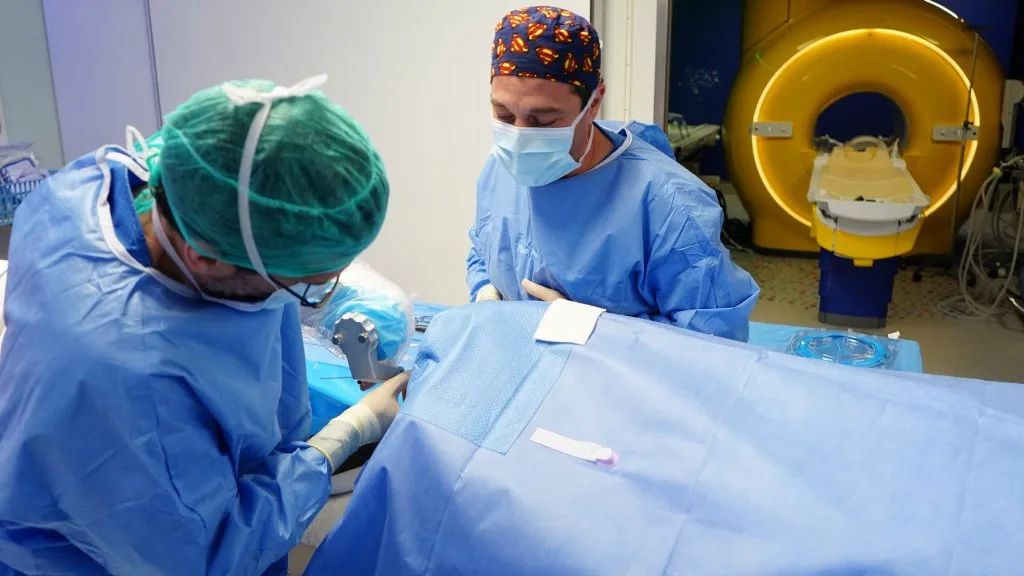
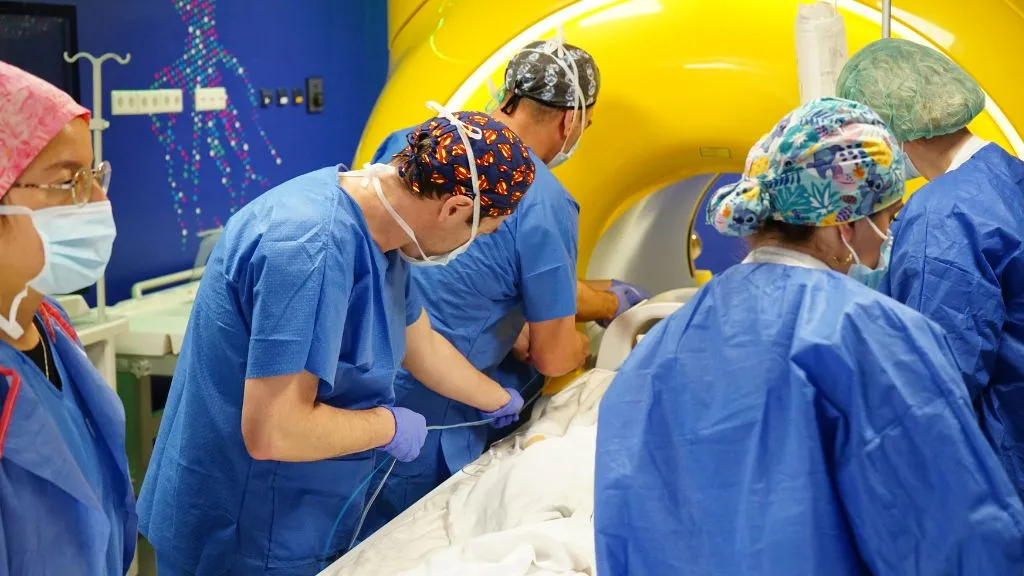
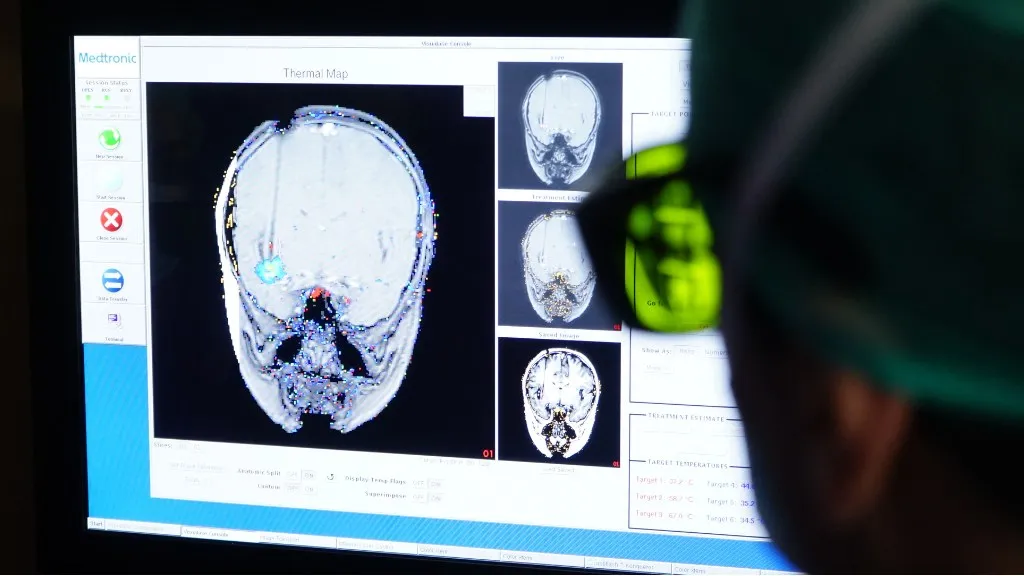
The procedure involves isolating the part of the brain where epileptic seizures originate using laser probes that are inserted through tiny incisions in the patient's scalp into the affected area of the brain, the posterior quadrant, which occupies two-thirds of the corresponding hemisphere. The surgical team performs the disconnection with the patient in the MRI scanner, in order to see in real time and with great precision where they are operating.
Every year, more than 4,000 children in Spain are diagnosed with epilepsy. One in three develops refractory or drug-resistant epilepsy. Half of these cases are potentially curable through surgery. Very few, however, have their focus located in the posterior quadrant of the brain and are candidates for temporo-parieto-occipital disconnection.
"The focus of epilepsy is more often located in other areas of the brain, such as the temporal or frontal lobe. At the hospital, we operate on two children with refractory epilepsy located in this area every year. Until recently, we performed open surgery, but laser ablation is changing epilepsy surgery," explain staff at the Refractory Epilepsy Unit at SJD Hospital.
Since 2005, SJD Barcelona Children's Hospital has had a Refractory Epilepsy Unit, which specialises in the diagnosis and treatment of epilepsy, and is a centre of reference in Spain for the surgical treatment of refractory epilepsy in children and adolescents. It performs between 50 and 60 surgeries each year.
Related news