Patient portal

"Preliminary results from CAR-T clinical trials point to complete remissions in some rheumatic diseases"

Dr Jordi Antón, Head of the Paediatric Rheumatology Service at SJD Barcelona Children's Hospital, explains the advances in the application of CAR-T therapies in paediatric systemic autoimmune diseases.
In February 2026, SJD Barcelona Children's Hospital, together with the ERN RITA, organised an international meeting of experts to define which paediatric patients with systemic autoimmune diseases might be eligible for treatment with advanced CAR-T therapies.
This is a field that some international teams have already begun to explore, but in order to better analyse the results and draw conclusions, it is necessary to agree on common criteria for these treatments. The Head of the Paediatric Rheumatology Service, Jordi Antón, points out: "if we want to compare results and draw solid conclusions, it is essential to use the same parameters".
The Hospital has hosted an international meeting on CAR-T therapies in paediatric systemic autoimmune diseases. What prompted this gathering?
CAR-T therapies have been used for a few years in paediatric oncology. Recently, some trials with adult patients with systemic autoimmune diseases have begun to apply these advanced therapies with promising results.
In the paediatric population, there are even fewer published cases, but they also show very good results. This led us to apply for a national grant to launch a clinical research project with CAR-T in children and adolescents.
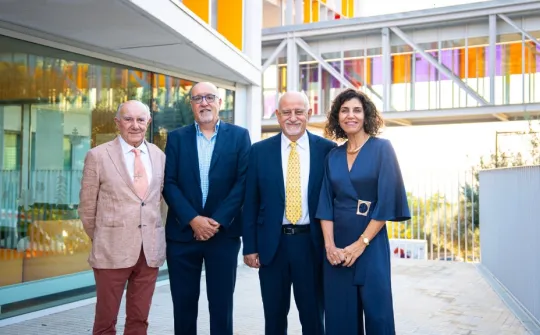
The event was attended by professionals from SJD Hospital and other experts from across the country.
Yes. When we designed the study, we saw that other international groups were also exploring this field, but they were not working with homogeneous criteria for inclusion, exclusion or outcome measures. Therefore, together with the European Reference Network RITA, we have organised an expert conference to define these criteria in the paediatric population: which patients to include and how to measure the outcomes.
Taking advantage of the meeting, we also organised an international in-person and virtual meeting to review and analyse what had been done so far in this field. We are very pleased with the reception it received from specialists registered from all over the world, which shows the high level of interest in the topic.
If these therapies are associated with oncology, how is the move to rheumatic diseases explained?
Because the approach is different. In oncology, the objective is to eliminate tumour cells; in systemic autoimmune diseases, what we are looking for is to "reset" the immune system. That is to say, to eliminate or modify the cells involved in the altered immune response so that the disease is controlled.
In which diseases could these advanced therapies begin to be applied?
We are planning to start the study in children and adolescents with systemic lupus erythematosus, juvenile dermatomyositis and systemic scleroderma.
What is the current treatment for these three diseases?
Currently, since the main objective is to control the inflammatory and immune response, corticosteroids, immunosuppressants, selective inhibitors and biological drugs are used. These treatments are effective in many cases, but they do not always achieve complete control, especially in the more severe forms.
And what could CAR-T therapy offer that current treatments do not?
Preliminary results from CAR-T trials in adults and in some paediatric cases point to complete remissions. That is to say, some patients have been able to completely control the disease, halt its activity and, in some cases, stop their medication. This is a great opportunity to explore better treatments.
We are developing a phase I trial in a hospital setting to assess the safety of the treatment and analyse its efficacy.
Which patients might be candidates for these therapies?
As with any new therapy, its safety and efficacy must first be demonstrated. In an initial phase, candidates would be patients who have failed standard lines of treatment and who present with severe or progressive forms of the disease. However, if the favourable response we anticipate is confirmed, it could become a treatment that is generalised to many other patients.
Why is it important to agree on common protocols and criteria?
Currently, there are international groups that have started projects with their own criteria. The issue is that if we want to compare results and draw solid conclusions, it is essential to use the same parameters. At the meeting, we have reached a consensus that we hope to publish in the coming months.
The grant you have been awarded is to start a clinical trial in the field of CAR-T therapies.
Yes. We have our own clinical trial, in collaboration with the Hospital Clínic and two other centres in the country. It is an early-phase trial being conducted in a hospital setting at the SJD Hospital Advanced Therapies Platform. It is primarily focused on assessing the safety of the treatment, but we will also analyse efficacy measures. We can cover the treatment of 15 patients and we hope to begin recruiting them at the end of this year.
What impact could the validation of this trial have on patients' quality of life?
If the preliminary results are confirmed, it could represent a major breakthrough; we could be facing a paradigm shift in the management of the most severe forms of systemic autoimmune diseases.
Could this model be replicated internationally?
If the results of the early-phase trials confirm the observed benefits, the idea is to establish international collaborative networks so that the treatment can be offered to more patients. The ultimate aim is that, if it proves safe and effective, health authorities will approve it as part of the treatment for these diseases.
And if it works in these three diseases, could it be extended to other conditions and specialities?
I'm convinced. This is a growing field of knowledge, and in a few years, it will change the way we approach certain diseases. It's not an easy process: it requires funding, new studies, and collaboration with other expert centres, but it is possible.
Related news