Patient portal

SJD and Clínic have performed Europe’s first operation on a foetus whose entire intestine had developed outside its body
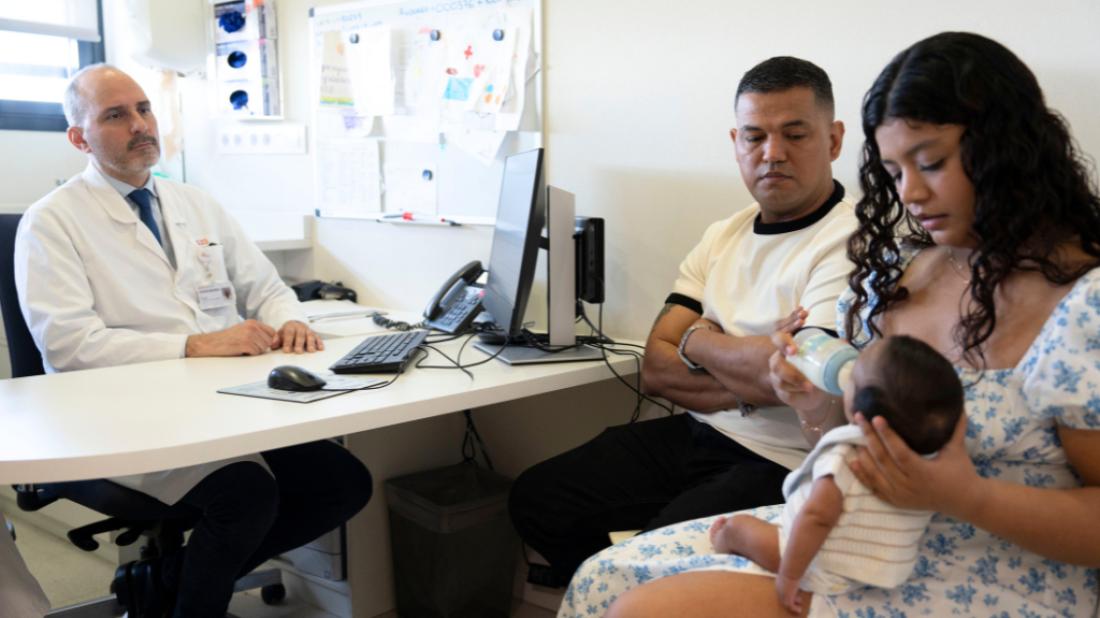
The medical team at SJD Barcelona Children's Hospital and Hospital Clínic Barcelona decided to perform foetal surgery at 28 weeks’ gestation to prevent irreversible damage to the baby.
A team comprising specialists from BCNatal —a consortium specialising in maternal-foetal medicine and neonatology comprising SJD Barcelona Children's Hospital and Hospital Clínic Barcelona— and specialists in paediatric surgery and anaesthesiology from SJD Hospital has, for the first time in Europe, operated on a foetus which, due to a severe malformation, had developed its entire intestine outside its body. The baby, who underwent surgery in the womb during the 28th week of gestation, was born six weeks later and is currently feeding normally.
The foetus had gastroschisis, a congenital malformation in which the baby’s intestines (and sometimes other organs) develop outside the body through an opening in the abdominal wall, located to the right of the umbilical cord, which does not close properly during pregnancy. As they are unprotected, the intestines are exposed to amniotic fluid, become inflamed, lose blood supply and may suffer necrosis, with very serious consequences for the baby after birth.
The healthcare professionals monitoring the pregnancy of the mother, a colombian 20-year-old woman, detected the foetal malformation during a routine ultrasound scan in the 20th week of gestation and referred her to BCNatal, a leading centre in obstetrics and foetal medicine. After evaluating the various options and consulting the case with the ethics committee, the medical team treating the expectant mother proposed a foetal surgery that has so far been performed only on very rare occasions in Colombia and the United States, but never in Europe.
The director of BCNatal, Eduard Gratacós, explains that foetuses with gastroschisis are normally operated on after birth, “but this case was so severe that the baby was at very high risk of losing a large part of its intestine if we waited until birth. Virtually the entire intestine was outside the abdomen and compressed through an opening barely one centimetre wide”. “If we hadn’t operated whilst the baby was still in the womb,” adds Xavier Tarrado, head of the Surgery Department at SJD Barcelona Children's Hospital, “the baby would have been at risk of short bowel syndrome and would have required long-term parenteral nutrition and even a bowel transplant.”
A successful operation
The foetal surgery took place on 10 February, lasted two and a half hours and was carried out by a team comprising specialists in foetal medicine and surgery, paediatric surgery, anaesthesiology and neonatology.
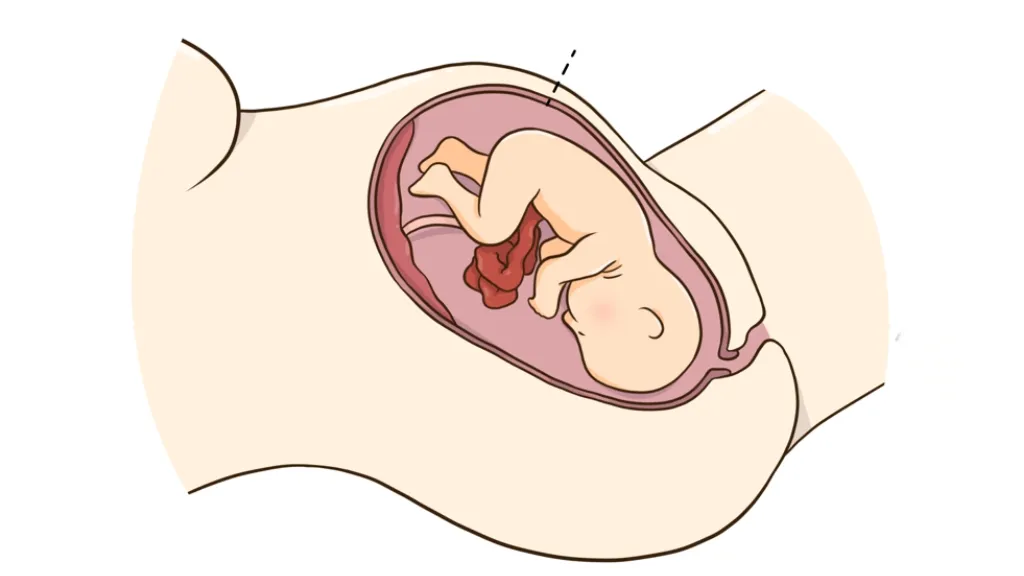
The surgeons made an incision in the mother’s abdomen to access the uterus; they then repositioned the foetus to allow access to its abdomen and performed the procedure laparoscopically. To do this, they inserted four trocars into the amniotic sac and, after draining the fluid and introducing gas to create space within the abdomen that would allow them to see and operate safely, they carefully repositioned the intestine within the abdominal wall. Upon completion, they closed the incision in the abdomen. This is a procedure that requires a high degree of precision, given that the foetus weighed 700 grams, the intestine was 80 centimetres long and had a diameter of 3 to 15 mm, and had to be reinserted through a puncture measuring just 1.5 centimetres.
Foetal surgery for the treatment of complex gastroschisis
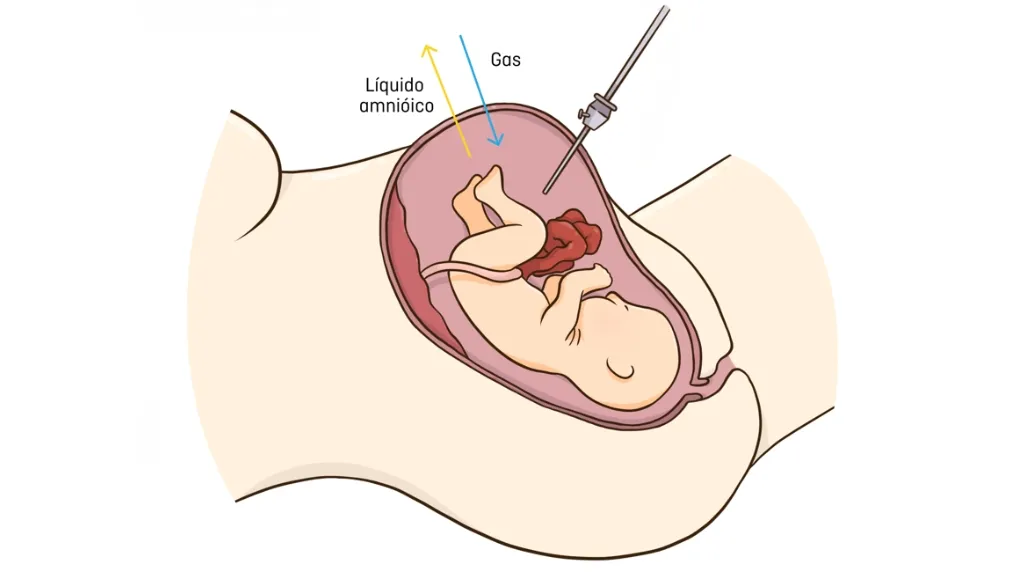
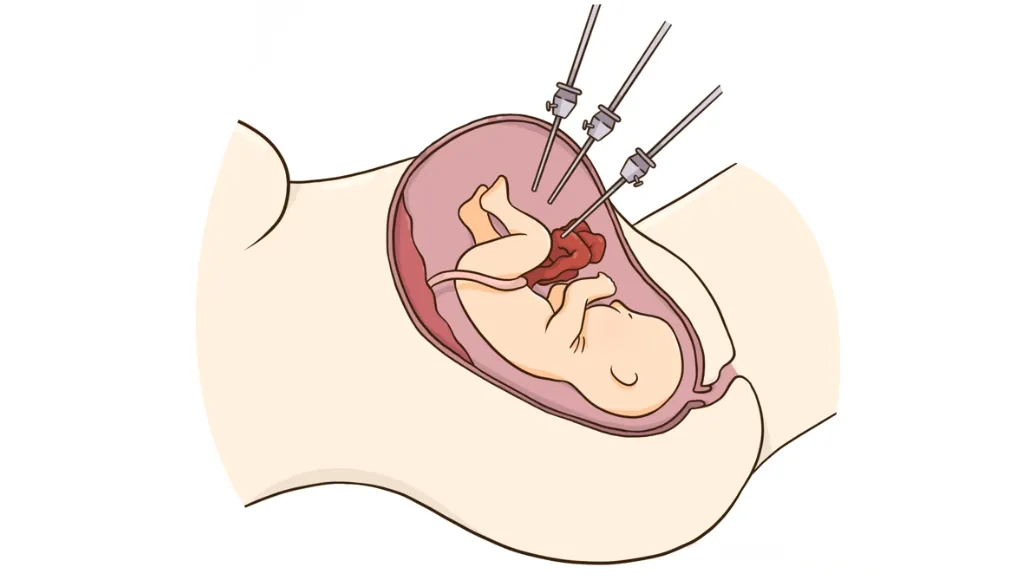
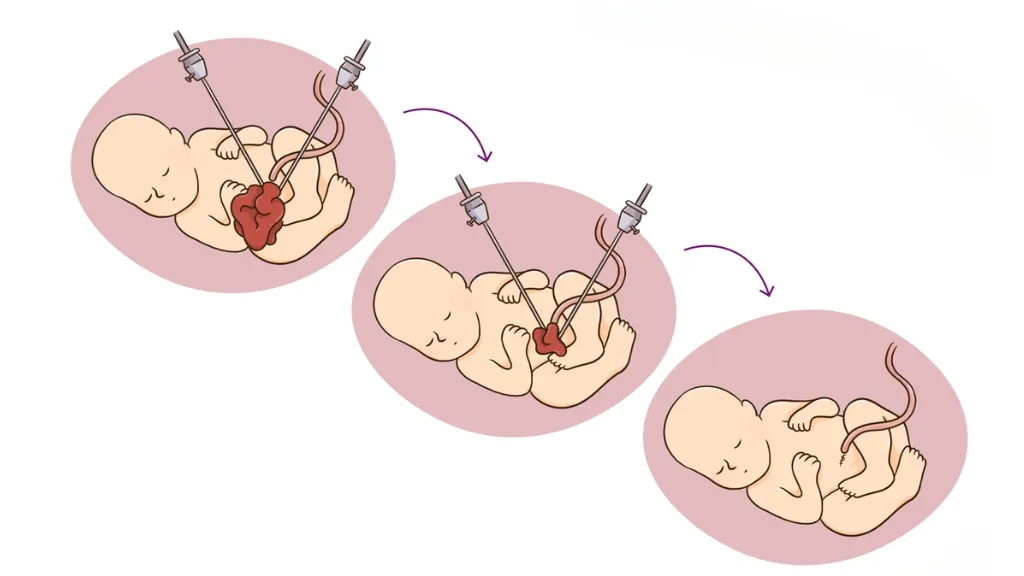
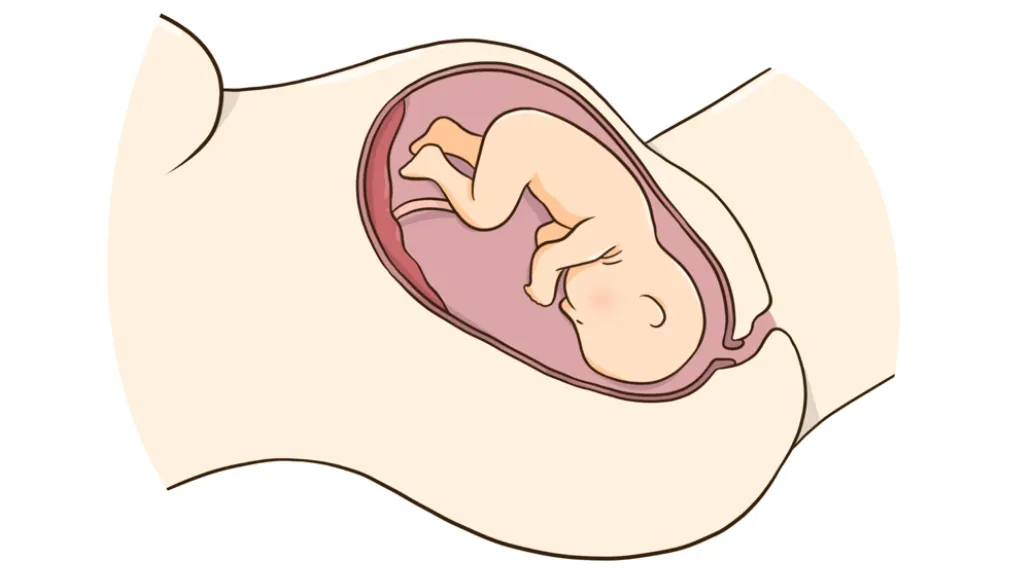
In the days following the procedure, ultrasound scans confirmed that the inflammation in the intestine was subsiding and that it was returning to its normal appearance. The pregnancy continued and the baby was delivered by caesarean section at 34 weeks’ gestation. Although the baby was underweight for its gestational age, the outcome was very favourable and, after a short stay in hospital, the baby was discharged.
Gastroschisis occurs in between 2 and 3 out of every 10,000 births (which translates to 120 cases annually in Spain and 2,400 in Europe), but foetal surgery would only be indicated in 10% of these cases. Specialists emphasise that this is a technique reserved for the most serious cases due to its complexity, but they stress that it offers a new ray of hope and can radically change the prognosis and the lives of these children and their families.
Related news