Patient portal

Mother-to-child transmission in Spain stands at up to 4.2%, a figure that is quite high for a country where the disease does not exist.
Chagas disease is largely unknown in Europe; however, it is estimated that around 70% of infected people on this continent remain undiagnosed. Vicky Fumadó, a paediatrician specialising in imported diseases and neglected diseases at SJD Barcelona Children's Hospital, states that this figure is worrying, as it is a disease that can remain asymptomatic for years and be transmitted without being detected.
Chagas disease is caused by a parasite called Trypanosoma cruzi, which is transmitted by a bedbug (triatomine bug). When the bug bites, it defecates, and the parasite enters the bloodstream through the faeces when people scratch or have skin lesions.
Although Chagas disease is endemic to Latin America, migration has brought the infection to European countries such as Spain, which has the highest number of cases on the European continent. In this context, vertical transmission—that is, from mother to child during pregnancy or childbirth—has become the main route of transmission.
In Spain, the rate of vertical transmission stands at between 2.7% and 4.2%, a high figure for a country where the disease does not naturally occur. Consequently, various early detection programmes have been developed, particularly during antenatal care. SJD Barcelona Children's Hospital, together with Hospital Clínic, were pioneering centres in the study of this disease. Vicky Fumadó has been coordinating the treatment programme at SJD Hospital for over 25 years. From 2026, the lead specialist at the Hospital will be paediatric infectious disease specialist María Ríos.


Treatment during the first year of life
Experts stress that, although the initial phase of the disease is usually mild, complications can arise years later. “A percentage of those infected may experience digestive problems, nervous system issues and, in particular, serious heart problems that can even lead to sudden death,” explains Vicky Fumadó.
Fortunately, there is a very effective window of opportunity if the condition is detected early: treatment in the first year of life achieves cure rates of 95%, whilst in adults the effectiveness drops to approximately 50%.
For this reason, screening of pregnant women is crucial. Although they cannot be treated during pregnancy, diagnosis allows the newborn to be monitored and treated early if necessary. Furthermore, treating the mother after childbirth and breastfeeding significantly reduces the risk of transmission in future pregnancies.
Most cases in Spain are concentrated among women from Latin America who contracted the infection in childhood without realising it. Specialists agree that the main challenge is to improve detection. Consequently, PAHO and the WHO have been working on various initiatives to provide information and tools to the entire population in the most affected areas. With more information, systematic screening and access to treatment, it is possible to stop vertical transmission and prevent new generations from being affected by this silent disease.
Carmen’s story
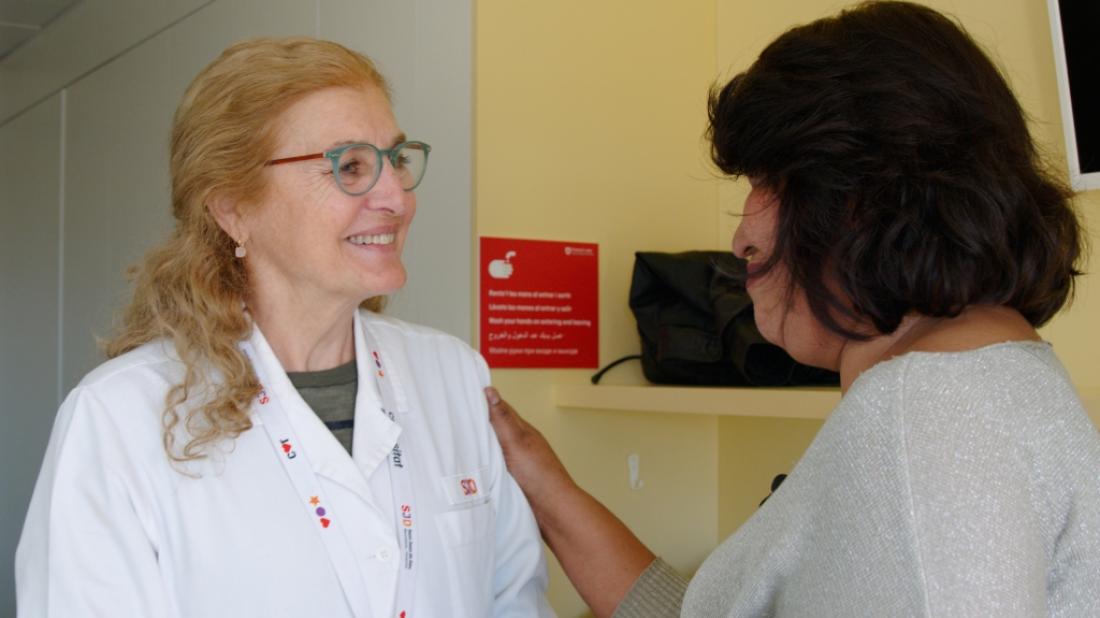
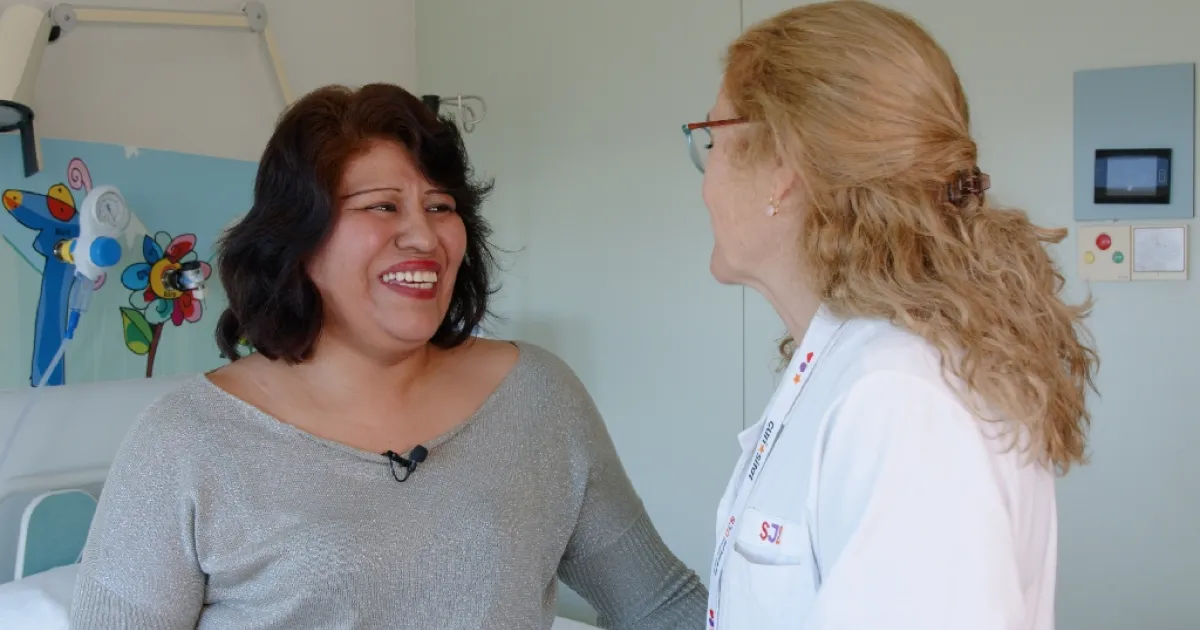
Carmen Martínez is a Bolivian woman living in Barcelona. When she gave birth, she discovered that both she and her newborn son had Chagas disease. “At that moment I broke down,” she recalls, “because I was the one who had passed it on to him.” Despite the initial shock, she received medical advice and they both began treatment.
Her son’s treatment lasted several months and, although it had to be interrupted due to an allergic reaction, it went well. Until the age of nine, the boy was under medical supervision and has had negative serology results for the last five years. Today, aged 12, he leads a completely normal life.
Carmen, for her part, also completed her treatment at Hospital Clínic and continues to attend regular check-ups. Drawing on her experience, Carmen explains that in Bolivia, a country with a high incidence of Chagas disease, there is increasingly more information and less stigma surrounding the disease.
Related news