Patient portal

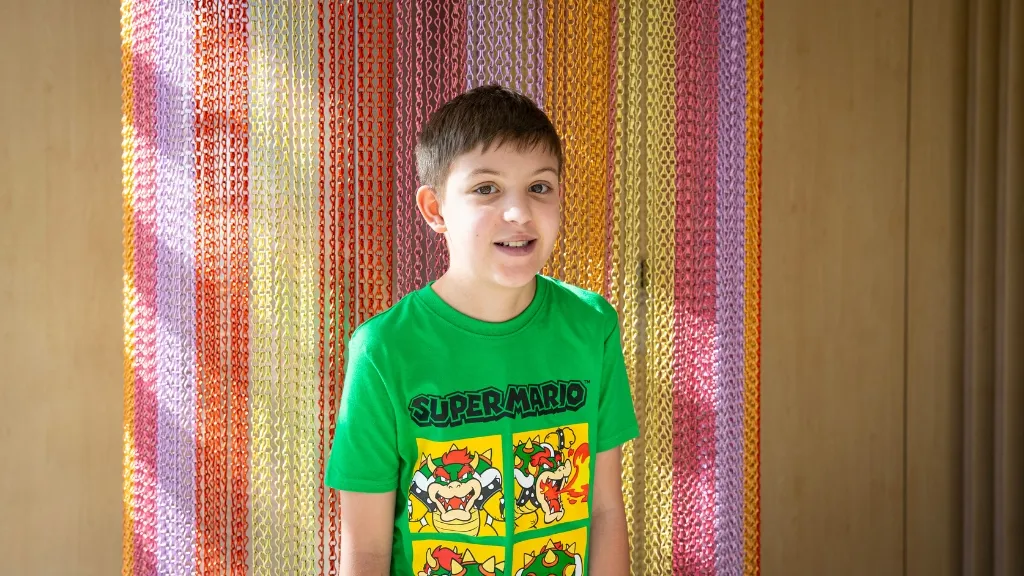
SJD Barcelona Children's Hospital successfully operates on a 10-year-old Romanian boy with a congenital heart defect
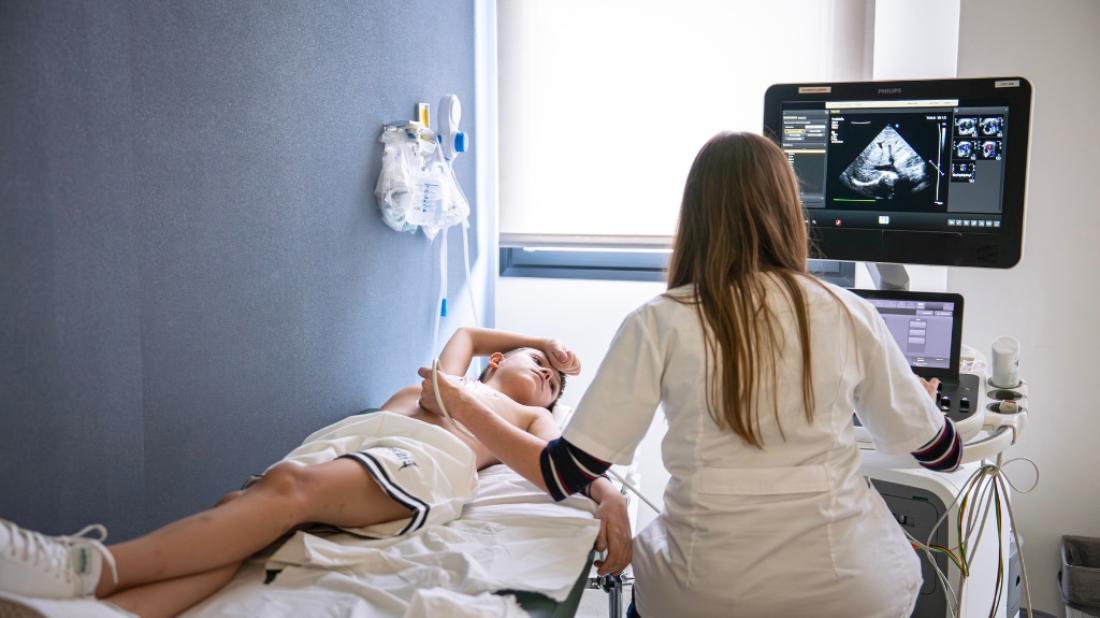
The young boy had severe pulmonary atresia — a life-threatening condition — that prevented him from walking.
Eduard was born with pulmonary atresia, a heart malformation that inhibits blood flow to the lungs for oxygenation. The artery responsible for doing so was extremely thin — only three millimeters in diameter — and was practically blocked. To compensate for this defect, Eduard’s heart had looked for alternative blood vessels to allow for circulation.
This meant that the young boy could go to school, but he could not exert himself. At nine years old, his condition worsened considerably, and he ended up being admitted to hospital. ‘Doctors told us they couldn't operate,’ explains his grandmother, ‘that they couldn't do anything else for him. We couldn't give up.’ That was how the family first contacted the International Patients Department at the SJD Barcelona Children's Hospital — a mother and child hospital specialising in high complexity pediatric diseases and a reference center for heart surgery.
On 16 October 2025, Eduard travelled to Barcelona by air ambulance. ‘Eduard’s case was very complex,’ explains heart surgeon Dr Stefano Congiu. ‘In Spain, we operate on these children when they are two or three years old. That is why we do not normally see cases as severe as Eduard’s. That is also why the operation we performed was palliative. Given the complexity of his case, we could not hope to cure him at the time, but rather improve his quality of life.’ The medical team managed to surgically increase the size of Eduard's pulmonary arteries—which were very underdeveloped—thereby increasing blood flow.
The boy recovered quickly. A few days later, his oxygen saturation levels rose to 85% and he could start walking again. Eight days later, he was discharged and was able to return home. His medical team will now keep a close eye on his progress alongside his cardiologist in his home country. ‘Within the next year,’ estimates Congiu, ‘we will be able to see whether he needs another operation and whether it is possible to perform corrective surgery this time.’
The procedure has changed Eduard and his family’s life. ‘Before, he couldn't walk or even go to the bathroom on his own, because when he stood up, his blood pressure and oxygen levels would drop. Now he can walk and his quality of life has drastically improved,’ notes the grandmother.
Related news