Patient portal


SJD Barcelona has treated the first successful paediatric case of deep brain stimulation for dystonia associated with the HPCA gene in a girl from the UAE
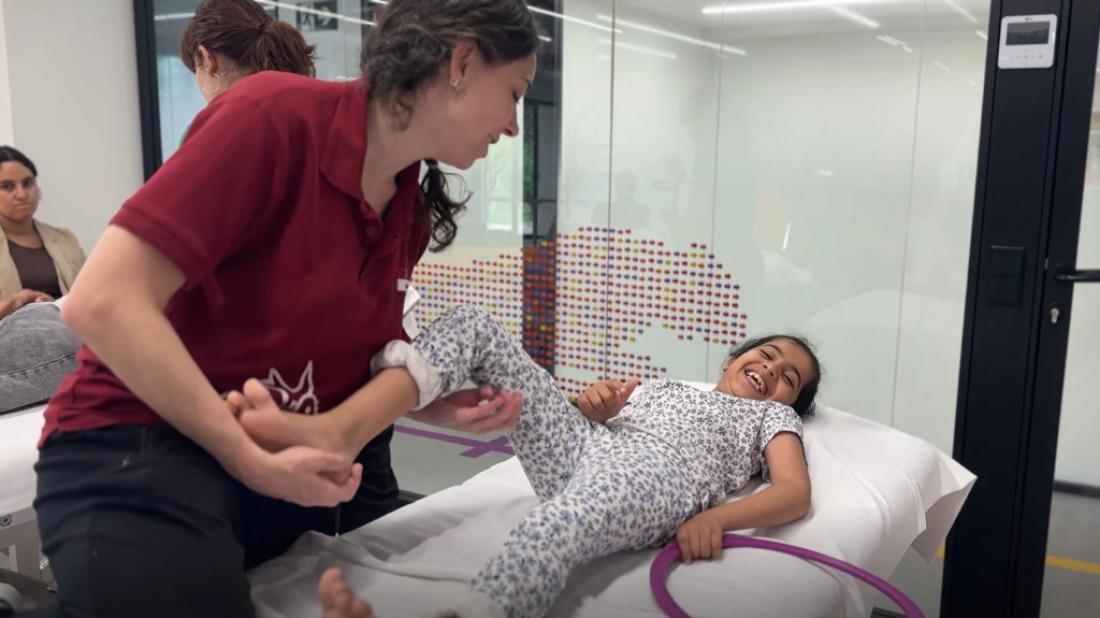
Najat, a girl from the United Arab Emirates, is the first paediatric patient to be treated using this technique, which has significantly reduced her involuntary movements and improved her independence and quality of life.
The team at the Movement Disorders Unit at SJD Barcelona Children's Hospital has, for the first time, performed a deep brain stimulation (DBS) procedure on a paediatric patient with dystonia and hypocalcinemia, who travelled from the United Arab Emirates to receive treatment. This is an ultra-rare genetic disorder, associated with mutations in the HPCA gene, of which only 20 cases have been reported worldwide to date, in both adult and paediatric populations.
According to Dr Juan Darío Ortigoza-Escobar, a neurologist at the hospital who led the treatment, “mutations in the HPCA gene, which plays a role in the functioning of the neurons responsible for controlling movement, can cause involuntary movements such as dystonia (abnormal postures) or chorea (rapid, uncoordinated movements)”.
Najat was the first paediatric patient to receive deep brain stimulation to treat this condition.
Najat’s case
Her symptoms began at the age of two and progressively worsened. By the age of six, the condition was so severe that she could barely walk without falling and had difficulty performing manual activities, such as writing or painting. She also experienced episodes of generalised chorea that could last between ten minutes and an hour.
In this particularly severe case, specialists at the Movement Disorders Unit at SJD Barcelona considered the possibility of treating her using deep brain stimulation. This technique involves implanting electrodes in specific areas of the brain related to movement control in order to modulate brain activity and reduce the symptoms of the disorder. Until then, only one successful case had been reported in an adult patient with the same condition.
Najat’s response to the treatment was very positive. “After the procedure, Najat had to work very hard with the hospital’s rehabilitation team to learn to control her movements. Eight months on, we can see a huge improvement in her chorea and dystonia. She can now walk unaided, she doesn’t fall over, she can do crafts, …”, explains Dr Ortigoza-Escobar.
Najat has now regained much of her independence; she can carry out everyday activities that used to be very difficult for her and continues to attend regular check-ups at SJD Barcelona Children's Hospital. The results of her case have been documented in a scientific study published to highlight the positive response to deep brain stimulation and to encourage healthcare professionals to consider this therapeutic option for children with the same diagnosis.
Her sister, with the same condition
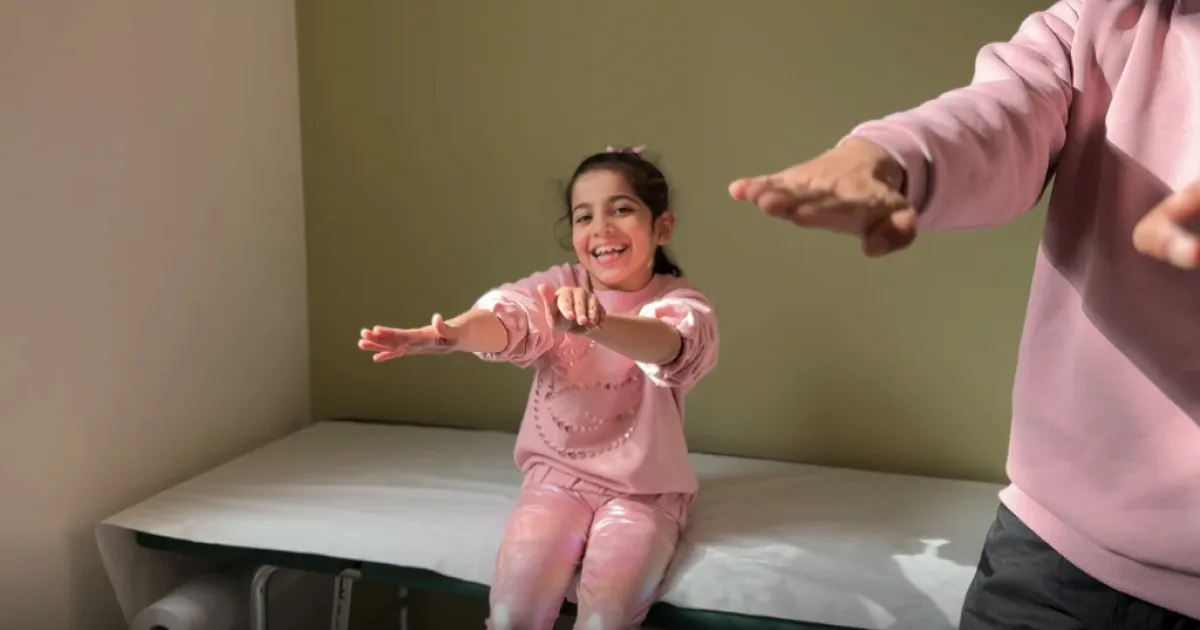
This genetically-based dystonia, linked to the HPCA gene, occurs when both parents are carriers. Consequently, Najat’s younger sister also has the same condition. Following the positive experience with the first patient, the medical team at SJD Barcelona have carried out a second procedure, also involving deep brain stimulation, on Najat’s sister. “Although she is still in the early stages of follow-up, she is already beginning to show positive results,” says Dr Ortigoza-Escobar.
Related news