Patient portal


SJD Barcelona and “Izas, la princesa guisante” set up an international committee to care for children with gliomatosis cerebri
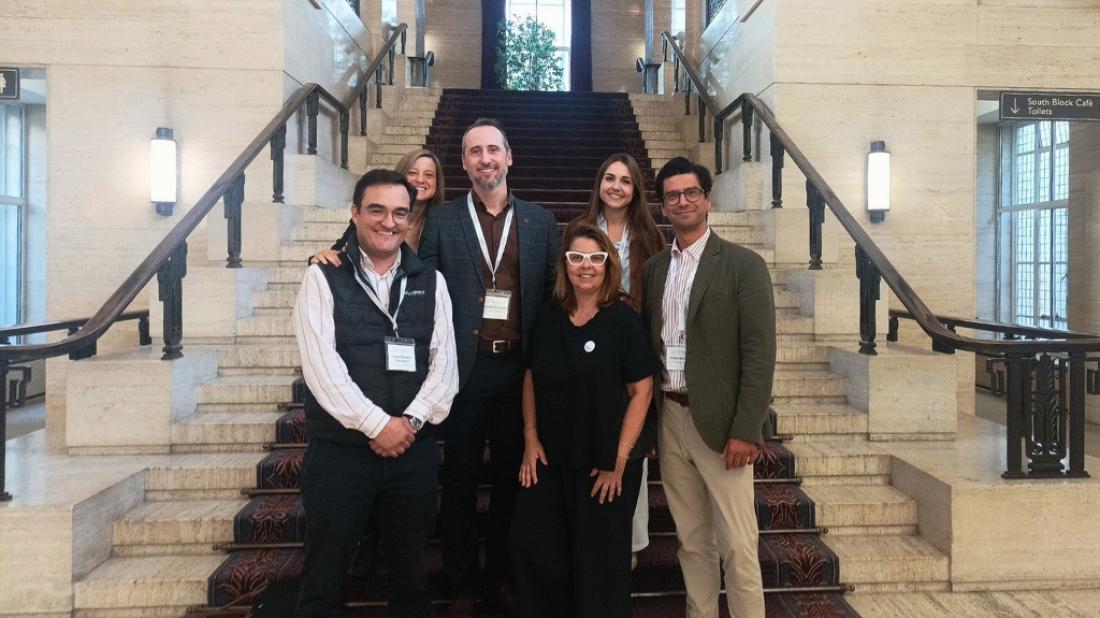
Doctors and researchers from Europe and the United States will meet monthly to analyse cases of this rare paediatric brain tumour, assess treatment options and monitor patients.
SJD Barcelona Children's Hospital and the charity “Izas, la princesa guisante” have achieved a new milestone in the fight against paediatric cancer: they have set up an international committee of experts in paediatric gliomatosis cerebri, comprising leading medical professionals and researchers from Europe and the United States, which will analyse each case individually and offer families a free international second opinion. Its aim is to put international scientific and clinical knowledge at the service of patients, regardless of where they receive medical care.
Gliomatosis cerebri, research into which both organisations have been promoting since 2013, is a very rare and particularly aggressive form of brain cancer for which there is currently no cure. It cannot be operated on because it spreads diffusely throughout the brain, like a spider’s web. In children and adolescents, it has a median survival of 14.5 months from the time of diagnosis.
The multidisciplinary committee, known as the Gliomatosis Cerebri International Tumour Board, is coordinated by the SJD Pediatric Cancer Centre Barcelona and involves more than 20 experts from leading centres of excellence in Europe and the United States: paediatric neuro-oncologists, radiologists, neurosurgeons, radiation oncologists, researchers and specialists in pathological anatomy and molecular diagnostics.
International second opinion and subsequent follow-up
The committee held its first meeting in early October and plans to meet monthly to assess the cases presented by the medical teams. The specialists review the available clinical documentation, including MRI scans, diagnostic reports, molecular analyses and data on the patient’s progress, to jointly evaluate possible treatment options. This assessment can help to refine the diagnosis, identify treatment options, evaluate potential clinical trials and support the decisions of the responsible medical team.
Marina Caballero, a paediatric oncologist at SJD Barcelona and a member of the committee, explains: “A very important added value is the in-depth molecular analysis that will be carried out on the tumour samples. These tests are not available for many cases around the world and, even if only in a few instances, they could offer treatment options.”
Furthermore, one of the distinctive features of the project is that it involves close monitoring of patients to review their progress and re-examine cases when new relevant clinical information becomes available.
An initiative at no cost to families
The specialists participate on the committee on a voluntary and unpaid basis. The assessment is offered free of charge to families, thanks to the collaboration of the Pediatric Cancer Centre Barcelona, the participating professionals and the financial commitment of Izas, la princesa guisante. The association will initially cover the costs of operational coordination, the transport of tumour samples and the necessary molecular sequencing when patients do not have access to these tests. The aim is to facilitate access to this specialist assessment, including for those in countries with fewer diagnostic resources.
For Mónica Sarasa, founder and president of the association, and mother of Izas, who died of this disease at the age of three, the project represents a particularly significant step forward for families. “Brain tumours are the leading cause of death in children with cancer. Even so, childhood cancer remains the least researched type of cancer. As families, we do not want to accept that prognosis, but it is very difficult to know where to find a specialist in gliomatosis cerebri and how to reach them. This committee will give families the certainty that they have done everything in their power and that their child has been assessed by the very best specialists.”
This committee marks a new step in the joint journey of SJD Barcelona and Izas, la princesa guisante, whose collaboration began in 2013, following Izas’s death. Dr Andrés Morales La Madrid, Director of Clinical Care at the SJD Pediatric Cancer Centre Barcelona, has been involved in this line of work since its inception, alongside the centre’s team. According to the neuro-oncologist, “setting up this international committee has been an important initiative that emerged at the last international conference, and we believe that, with the support of this group, we can not only help more families by supporting the medical team that cares for children with gliomatosis cerebri locally, but also make progress in research.”
Related news