Patient portal

The EPICA-DIPG consortium, led by SJD Barcelona, is trialling a pioneering immunotherapy for this paediatric tumour

This is a European trial aimed at tackling diffuse intrinsic pontine glioma (DIPG), an aggressive and fatal paediatric brain tumour, which will evaluate immunotherapy and the system required to produce, transport, administer and monitor it across centres in different countries.
SJD Barcelona Children's Hospital will lead, through the SJD Pediatric Cancer Centre Barcelona, a European research consortium called EPICA-DIPG (European Paediatric Immunotherapy Trial with Combination Advanced Therapy Medicinal Products for DIPG), supported by the Horizon Europe Cancer Mission, to evaluate a novel immunotherapy strategy for children and adolescents with Diffuse Intrinsic Pontine Glioma (DIPG).
DIPG is the most common paediatric brain tumour and one of the deadliest paediatric cancers. More than 300 new cases are diagnosed in Europe every year, usually in children aged between 5 and 10. The tumour originates in a region of the brainstem involved in essential functions such as movement, breathing and swallowing, and progresses rapidly.
Its diffuse growth through healthy brain tissue makes surgical removal impossible, whilst conventional cancer treatments have proved ineffective. Focal radiotherapy remains the main treatment and can provide temporary relief from symptoms, but it is not curative. Fewer than 10 per cent of patients survive for two years after diagnosis and fewer than 1 per cent survive for five years.
In this context, EPICA-DIPG brings together three interconnected areas of work: a multinational Phase I clinical trial; a complementary diagnostic approach for the minimally invasive monitoring of the immune response and response to treatment; and an accessible manufacturing model for the cross-border production and delivery of advanced therapies.
Together, these strands will address the clinical, regulatory and logistical requirements involved in testing a complex investigational immunotherapy in hospitals across different European countries.
This study provides a framework for evaluating diagnosis, treatment and also the manufacturing model and logistics between centres
Built on collaboration
EPICA-DIPG will run for five years and brings together leading paediatric oncology centres, research organisations, regulatory experts, health technology assessment specialists, communication partners and patient organisations from Spain, Italy and the Netherlands. Patient recruitment will involve the Pediatric Cancer Centre Barcelona at SJD Barcelona, Bambino Gesù Hospital in Italy and the Prinses Máxima Centre in the Netherlands.
“EPICA-DIPG does not just ask whether a new treatment strategy can be tested, but whether the entire pathway surrounding that strategy could be expanded,” says principal investigator Andrés Morales La Madrid, clinical director of the Pediatric Cancer Centre Barcelona and a researcher in the Paediatric Cancer Treatment research group at the Institut de Recerca Sant Joan de Déu. He continues: “For a rare paediatric cancer such as DIPG, the trial, monitoring tools, regulatory preparation and delivery model must all be considered together if the project is to generate useful evidence.”
The consortium also includes patient organisations from the three participating countries: Pulseras Candela, Fondazione Il Coraggio dei Bambini and Vereniging Kinderkanker Nederland. This means that associations, family representatives and carers will contribute to the design, review and ongoing evaluation of the clinical protocol and patient-facing materials. Their involvement aims to ensure that the study is understandable, ethically sound and sensitive to the lived experiences of children and families facing a serious and rare diagnosis.
“Families understand both the urgency of DIPG and the uncertainty involved in early-phase research,” says Nieves Tejeda, head of fundraising at Pulseras Candela. “Their experience must shape how the trial is designed, how participation is explained and how the project communicates what the study can (and cannot) demonstrate.”
A pioneering treatment in early-stage clinical trials
EPICA-DIPG will evaluate an investigational combination immunotherapy that has never been tested in humans in this form. As a Phase I study, its primary objective is to assess safety. It will also examine feasibility and generate valuable evidence to help guide the next generation of clinical and translational research.
It will also develop and validate a complementary diagnostic approach for minimally invasive, real-time monitoring of the immune response and disease burden during the trial.
This diagnostic work may help researchers understand whether immunological changes occur following treatment and how the tumour may be responding. It also supports a trial design in which treatment, monitoring and interpretation must work together across different centres.
An academic model for the delivery of advanced therapies
Advanced therapy medicines are complex and costly to produce, particularly when patient numbers are low and specialised manufacturing capacity is concentrated in a limited number of centres.
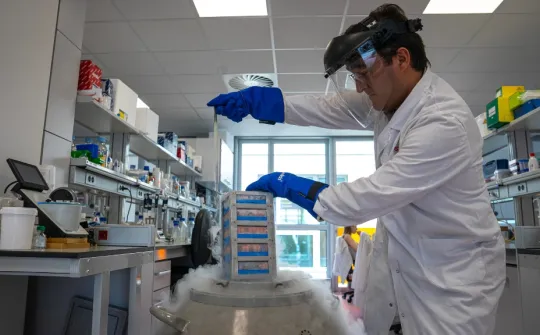
EPICA-DIPG will trial a model in which advanced therapy medicinal products are manufactured centrally at specialised academic facilities and dispatched to participant recruitment centres. This will enable the project to assess whether decentralised patient recruitment can yield good results alongside centralised production, even in hospitals without their own manufacturing capacity.
According to immunologist and paediatric researcher Alessandra Magnani, head of the Advanced Therapies Platform at SJD Barcelona Children's Hospital, “a complex cell therapy must be assessed as a complete process: how it is produced, transported, administered and monitored. This is particularly relevant in rare paediatric cancers, where no single centre can answer all the questions on its own.”
For this reason, this trial serves as a framework for evaluating diagnosis, treatment, and also the manufacturing model and logistics between centres. This approach could also have relevance beyond paediatric oncology, providing valuable insights into the administration of other therapies for other diseases.
If EPICA-DIPG succeeds in generating the evidence it aims to produce, it could aid clinical evaluation at later stages, future complementary diagnostic development, the assessment of new healthcare technology, and the development of academic-led models for advanced research into therapies for rare paediatric cancers, helping to lay the foundations for future research options for children and families affected by DIPG.
Related news