Patient portal

"Our son's illness has brought us to turning points, like when we had to get him the gastronomy button"
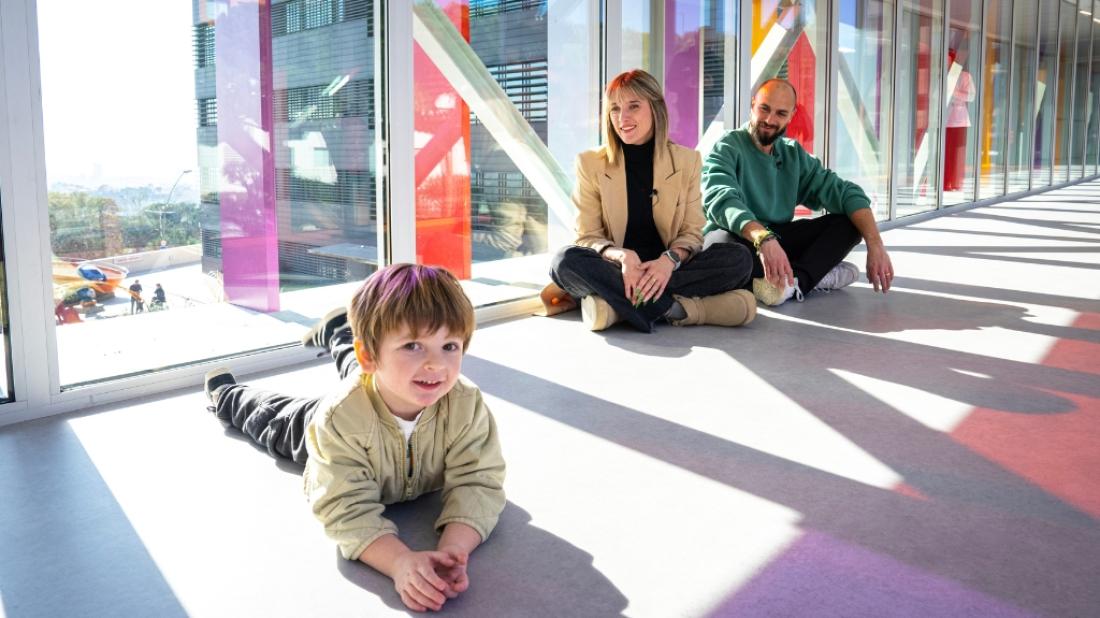
Niel has propionic acidemia, a rare metabolic disorder that causes the body to not synthesise protein properly and be unable to obtain energy from it.
Andrea recalls that the pregnancy with Niel, her son, was good. The medical check-ups were fine and there were no warning signs. The first days at home with the baby also passed without any concern. But when Niel was only six days old, the professionals at SJD Barcelona Children's Hospital alerted them that something was wrong and summoned the family.
Thanks to newborn screening, they were able to get a diagnosis quickly: Niel had propionic acidemia, a rare and chronic metabolic disorder. This condition means the body cannot properly synthesise and process protein, either animal or plant-based. If he consumes more than he can tolerate or less than he needs, it can cause a decompensation, which can lead to neurological problems.
Dr Silvia Meavilla, a paediatric specialist in Gastroenterology, Hepatology and Nutrition at SJD Hospital, explains that it is a multisystemic disease, affecting the entire body at a cellular level. "It's not just protein that can cause the child to decompensate, but also stressful situations such as an infection. Their body cannot maintain its energy balance," she says.
The head of the Hospital's Congenital Metabolic Diseases Unit, Dr Àngels García Cazorla, points out that propionic acidemia encompasses a broad spectrum of conditions: from infants who are asymptomatic to cases with severe brain damage following decompensations. "It all depends on metabolic control and how quickly you act," she explains.
The disease itself and metabolic decompensations can lead to other organ impairments in children with propionic acidemia. One of the most sensitive is the heart, as it has a very high energy requirement, and the very restrictive diet they follow does not, in some cases, allow the heart to develop and function correctly.
Receiving a diagnosis
"At first you go through denial, because everything you're told is bad: the disease is little known, there's no specific treatment and there's no cure," says Lluís, Niel's father, recalling when the professionals gave them the diagnosis. And Andrea adds: "No one is prepared for this. I didn't want this life, this motherhood, or this chronic condition for my son."
In time, the family learnt, by asking professionals and seeking information, that the dietary and medication regimens were the key to the treatment. Thus, they adapted to this new life with constant changes.
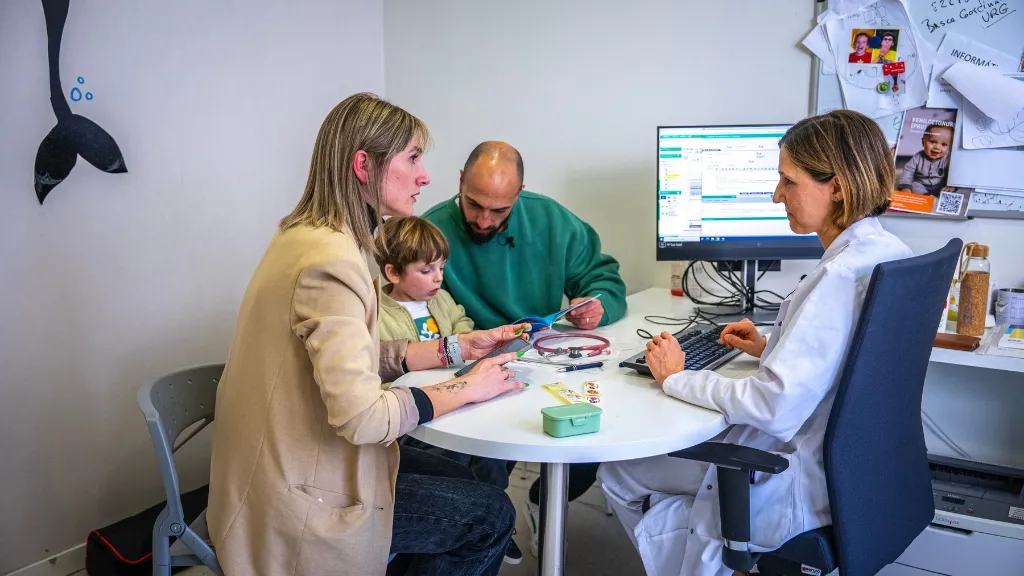
The dietitian at SJD Hospital, Natàlia Egea, explains that these children need very strict and individualised diets, as their diet is just as important as their medication regimen. "If they don't eat what they're supposed to or don't meet their energy requirements, there is a risk of decompensation," says Egea.
There are no 80-year-olds with this disease because they weren't diagnosed and didn't live long enough. We have changed the course of the disease simply by diagnosing it in time.
From a common illness to a hospital admission
When Niel was two and a half, he suffered a serious decompensation following a common illness he caught at nursery. He stopped eating and had to be readmitted to hospital for weeks. "It was the first time we really faced the illness head-on," recalls Andrea. They had been through other hospital stays, but it was then they realised that a health problem which is mild for other children could lead to serious complications for Niel.
From that point on, and after four months with a nasogastric tube, it became clear that more permanent external support was needed to supplement his oral feeding and thus guarantee his nutrition 100%. The professionals suggested a gastronomy button. "Accepting this device was one of the most difficult moments and it brought us to a turning point. No one wants to see their child fed like this," says Andrea.
For both Niel and his parents, it was a process of grieving and adaptation. At first, the boy never wanted to take his clothes off or look at himself in the mirror; he didn't want to see the device or look at himself with it. He also didn't want anyone touching his button, even when it was necessary for care. "Seeing a tube coming out of your child's stomach isn't pleasant, but you have to get used to it," adds Lluís, aware that it was the right decision to ensure Niel's well-being.
Living with uncertainty
Niel's parents describe him as a cheerful and full-of-life child. "He's happy, enthusiastic and has a great will to live," they say. Currently, he eats most of his food by mouth, follows a controlled diet, takes daily medication and is under constant follow-up by specialists in cardiology, neurology, gastroenterology and psychoneurology.
Healthcare professionals highlight the importance of early diagnosis. "There are no 80-year-olds with this disease because, unfortunately, they were never diagnosed and didn't live to see it." All this is changing, all this is leading to a new horizon, to a new future. We have changed the natural history of the disease just by diagnosing it in time," says Dr Geòrgia Sarquella, Head of the Paediatric Cardiology Service at SJD Hospital.
"With a disease like this, you're always on alert, always afraid," admits Andrea. But they also explain that the disease has not separated them, but has brought them together as a family. They have learnt to live with uncertainty and to value the little things.
A documentary to raise funds
As rare diseases affect a small number of people, research into these conditions is often underdeveloped. That is why Niel's family has filmed a documentary, directed by Sonia Solís, telling their story and showing their day-to-day life. The film, entitled 'Niel. Living to Survive', was first screened at an event in Santa Susanna, Barcelona, and all proceeds from the ticket sales were donated to SJD Barcelona Children's Hospital to continue and strengthen research into propionic acidemia.
Related news