Patient portal

For the first time in Spain, the SJD Barcelona Children's Hospital treats a baby with OTC deficiency using gene therapy
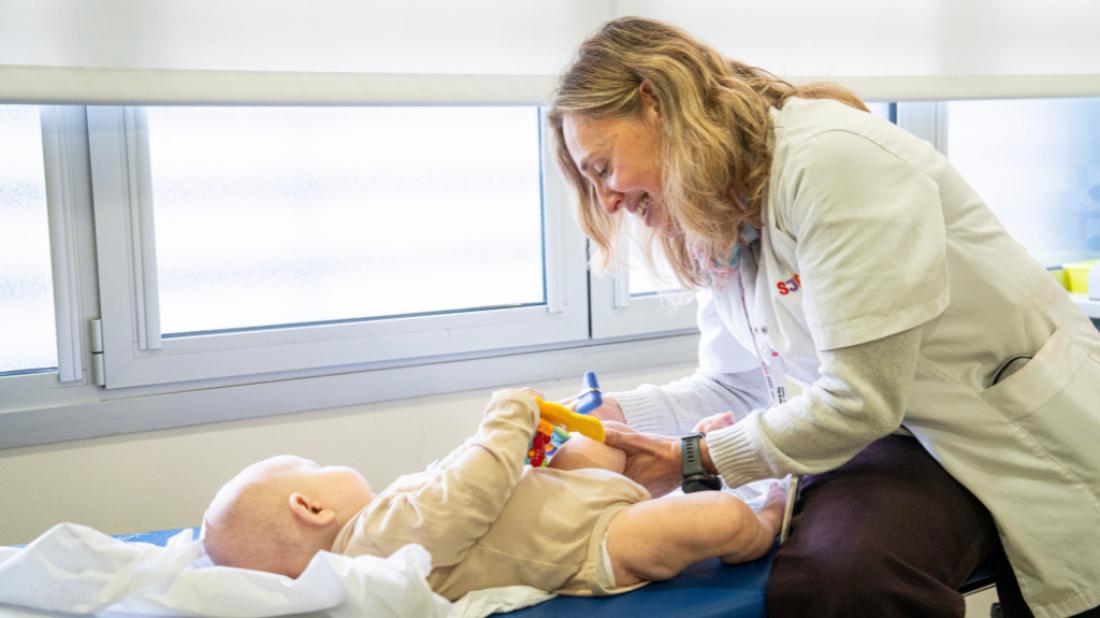
With a single intravenous infusion, hospital staff inserted a correct copy of the OTC gene into the patient's liver.
As part of an international clinical trial, the SJD Barcelona Children's Hospital has treated a patient with a rare disease—ornithine transcarbamylase (OTC) deficiency—using gene therapy for the first time in Spain. The patient is an eight-month-old baby from Lyon, France, who was given the treatment last December.
He is currently the only patient in Spain to have been treated with this innovative technique, which has only been used in a very small number of cases in the United Kingdom and the United States to date.
OTC deficiency is a genetic metabolic disorder of the urea cycle that prevents the body from properly eliminating the ammonia produced when proteins are digested. Ammonia is a toxic substance and, when it accumulates in the blood, it can seriously affect the brain, causing severe neurological problems and, in severe cases, coma or even death, if left untreated.
Beyond conventional treatment
Conventional treatment to control the disease includes a special low-protein diet and medications that help remove ammonia from the body. Even so, patients may still suffer from severe episodes of toxicity.
At the SJD Barcelona Children's Hospital, we have applied this innovative gene therapy, which consists of a single intravenous infusion that inserts a correct copy of the OTC gene into the liver via a viral vector specifically designed to act on this organ. This is an advanced therapy that directly addresses the cause of the disease without first extracting or manipulating the patient's cells.
According to Dr Àngels García Cazorla, Head of the Congenital Metabolic Diseases Unit at the SJD Barcelona Children's Hospital, 'although it is still very early days, the patient's progress is very positive: no side effects have been detected and metabolic parameters have clearly improved'.
The initial results show a significant reduction in toxic markers. In addition, the medical team has been able to progressively increase the amount of protein in the patient's diet, a key factor in promoting the baby's growth and neurological development and reducing the risk of serious decompensation.
The medical team is closely monitoring the patient to assess the long-term efficacy and safety of the treatment.
Advanced therapies at the hospital
The implementation of this innovative therapy consolidates the SJD Barcelona Children's Hospital as a leader in advanced therapies and reinforces its active role in international clinical research. These types of treatments represent a novel therapeutic strategy that offers new opportunities for children with rare diseases for which there are currently no effective treatments. The Hospital has a platform for developing and manufacturing new therapies focused on the pediatric age group.
Related news