Patient portal

SJD Barcelona Children's Hospital, first center to implement brain monitoring in cardiac surgery
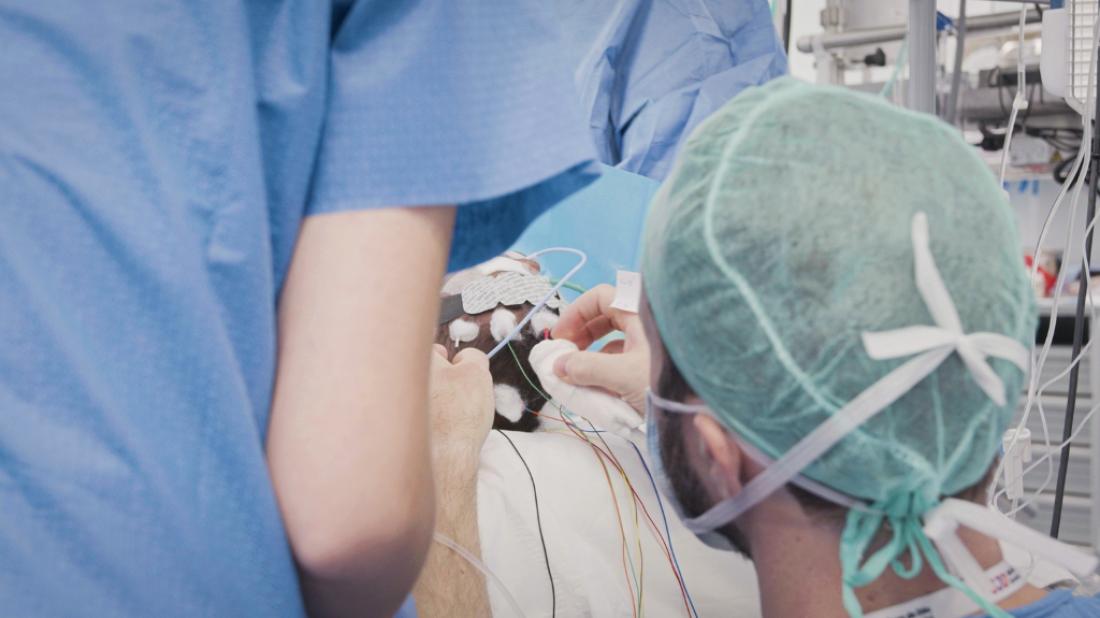
It allows real-time analysis of brain activity and nearby nerves during surgery in order to detect and prevent situations of low blood flow and nerve damage.
Over the last 25 years, the mortality rate for children undergoing heart surgery for serious heart disease has fallen dramatically, from 50% to 5%. The challenge now facing cardiovascular surgeons is to reduce the complications that can arise from this type of surgery and the associated morbidity.
With this goal in mind, the cardiac surgery and intraoperative neurophysiology teams at SJD Barcelona Children's Hospital have launched a multimodal neuromonitoring programme for cardiac surgery procedures.
The surgical treatment of serious congenital conditions, such as tetralogy of Fallot or transposition of the great arteries, requires the use of a cardiopulmonary bypass machine. This device temporarily replaces the function of the heart and lungs during surgery so that surgeons can repair the heart defect.
Until now, during surgery, professionals only assessed the saturation or oxygenation received by the brain using two infrared sensors attached to the front of the patient's head. Now, they perform more comprehensive brain monitoring, in the same way as in neurosurgery. To do this, they place multiple electrodes that capture activity in all areas of the brain for real-time analysis.
"With this monitoring, we have very precise control over what is happening at all times during the operation. Not only do we measure cerebral saturation, we also perform an electroencephalogram and evoked potentials. All these controls allow us to immediately detect any variation in blood flow and reduce the risk of neurological complications," says Jana Climent, head of the Intraoperative Neurophysiology and Neuromodulation Unit.
The only hospital in Spain
SJD Hospital is the only hospital in Spain that performs this type of comprehensive pneumonitoring in this type of surgery. In addition to the brain, neurophysiologists also monitor the recurrent laryngeal and phrenic nerves, involved in voice and breathing respectively, to preserve and protect these key functions.
In the first eight months of the programme's implementation, this procedure has been applied in 100 procedures.
"None of the monitored patients suffered any damage to the phrenic or recurrent nerves, which is estimated to occur in up to 28% of cases. Nor have we observed any complications in the central nervous system in these patients. Multimodal neurological monitoring allows us to detect and, consequently, prevent neurological injuries that can occur during cardiac surgery in which the patient is in an artificial situation of tissue perfusion and oxygenation," concludes Stefano Congiu, head of the Cardiovascular Surgery Service at SJD Hospital.
Related news