Patient portal

SJD Barcelona has created the world’s largest registry of paediatric patients with Brugada syndrome
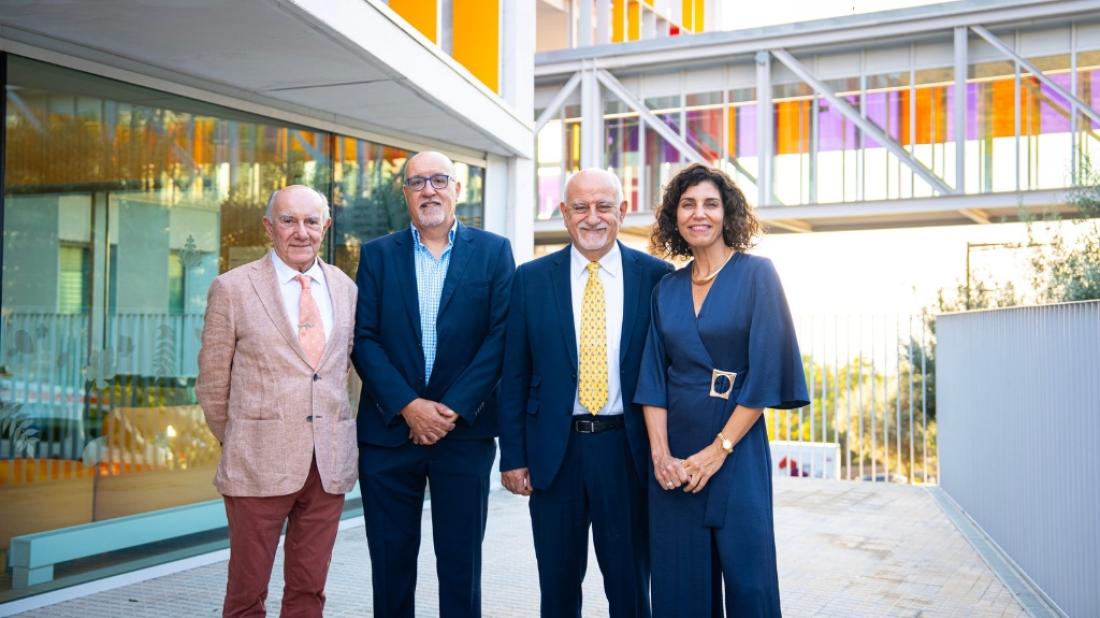
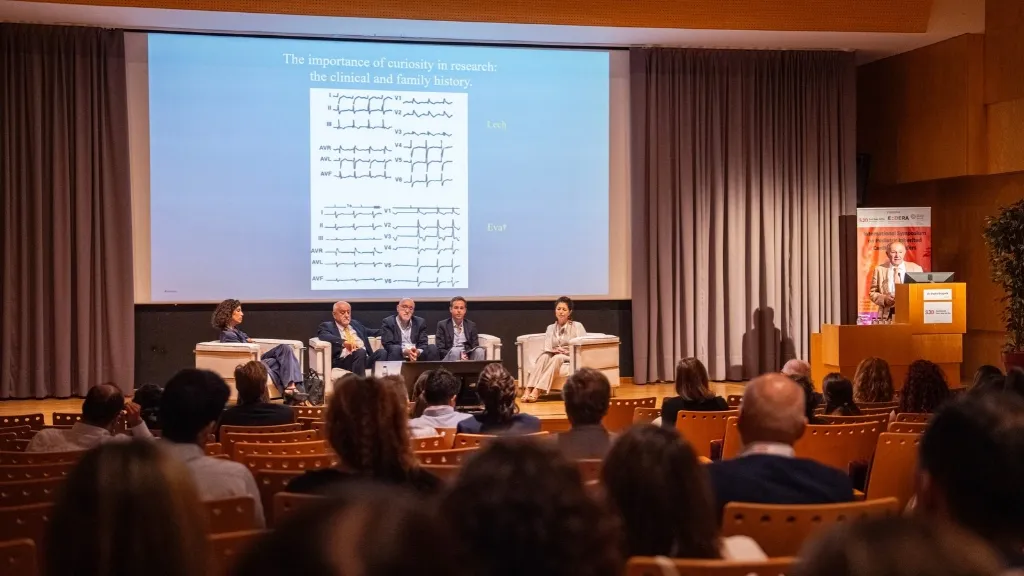
The register, which already includes the 200 children treated by the hospital, was presented at the International Symposium on Paediatric Hereditary Heart Diseases, which was attended by international professionals who came together to share their expertise.
Brugada syndrome is an electrical heart disorder that can cause serious heart rhythm disturbances — arrhythmias and sudden death — and is diagnosed much more frequently in adults. When it manifests at an early age, patients may present a higher-risk clinical profile.
A child may attend a cardiology consultation appearing to be in good health and discover that they have Brugada syndrome after a family member has suffered a serious arrhythmia or sudden death. In many cases, these paediatric patients are asymptomatic and are identified through a family-wide screening programme. Bringing together these rare cases, which are currently scattered across different centres and countries, is the aim of the world’s first registry of paediatric patients with Brugada syndrome, spearheaded by SJD Barcelona Children's Hospital.
The registry initially contains data on the 200 paediatric patients with Brugada syndrome currently being treated at SJD Barcelona and has been established with an international focus. The hospital is already working with centres in other countries, including the Netherlands, Switzerland and Italy, and plans to gradually incorporate new hospitals and patients from Europe, Latin America, Africa and Asia, particularly from countries in South-East Asia, where Brugada syndrome is particularly prevalent.
The low prevalence of the condition in the paediatric population means that centres usually have only a small number of patients. This dispersion makes it difficult to carry out studies with sufficiently large sample sizes to draw robust conclusions. The registry was presented during the International Symposium on Paediatric Hereditary Heart Diseases, organised by SJD Barcelona, which brought together international specialists in Brugada syndrome and other paediatric arrhythmic conditions in Barcelona.
According to Georgia Sarquella-Brugada, head of the Cardiology Department at SJD Barcelona Children's Hospital, “the registry will, for the first time, provide a comprehensive overview of the affected paediatric population: how many patients there are, where they are located, how the condition presents during childhood, and which characteristics may be associated with greater severity”.
The challenge of uncovering the cause of 70 per cent of cases
One of the main objectives of the registry will be to advance genetic research into Brugada syndrome. Currently, the SCN5A gene is the main known gene associated with the condition, but alterations in this gene account for only a proportion of cases. This means that there is still a large proportion of cases (70 per cent) whose genetic basis is unknown. Researchers are investigating the possibility that, in addition to alterations in a single gene, a combination of different genetic variants may be involved in some patients.
“The major challenge is to understand what happens in patients in whom we cannot find a known genetic alteration. It may be that there is not a single gene responsible, but rather a combination of different genetic factors. To be able to identify these patterns, we need to study many more patients,” explains Georgia Sarquella. The registry will enable a gradual increase in the number of patients available for this type of study and, in a second phase, facilitate the collection of samples to carry out more extensive genetic research.
The diagnosis of Brugada syndrome does not depend solely on genetics. The key test is the electrocardiogram (ECG), in which specialists look for a pattern characteristic of the condition. Genetic testing can provide additional information, but not all diagnosed patients have a known genetic abnormality. Precisely for this reason, one of the challenges in caring for these patients is to improve the ability to recognise the electrocardiographic pattern, particularly outside specialist centres.
A significant proportion of paediatric patients with Brugada syndrome are identified through family screening. When an adult presents with a serious arrhythmia or a sudden death occurs within a family, specialists may recommend that other family members, including children and adolescents, be screened to determine whether they are also affected.
This family screening enables the identification of patients who have not yet developed symptoms and allows for the establishment of specialised cardiological care. SJD Barcelona Children's Hospital has extensive experience in the follow-up of paediatric patients with arrhythmias and maintains a network of collaboration with national and international centres. This work has enabled the assembly of a cohort that forms the initial basis of the new global registry, the most comprehensive of its kind.
A registry open to the international scientific community
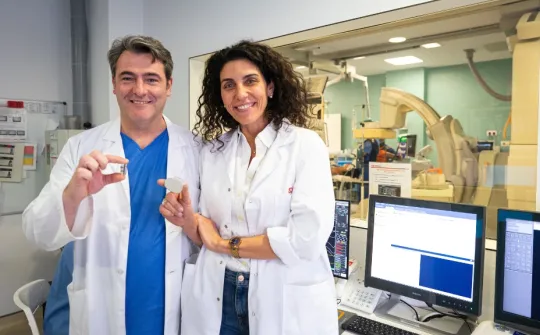
SJD Barcelona has already developed the necessary technological infrastructure to launch the registry and establish the mechanisms required to incorporate patient data from different countries, in accordance with the applicable ethical, legal and data protection requirements. The initiative aims to become a platform for international collaboration, generating knowledge about Brugada syndrome in the paediatric population and facilitating future multicentre research.
This project was presented at the International Symposium on Paediatric Hereditary Heart Diseases, where specialists from various countries shared the latest advances in the diagnosis and treatment of paediatric arrhythmias and analysed complex cases of patients with Brugada syndrome. Among the participating experts were the Brugada brothers, who discovered the condition. One of them, Josep Brugada, is a consultant at SJD Barcelona Children's Hospital.
Related news