Patient portal

Scoliosis
We are a leading international facility, experts in the treatment of childhood and juvenile scoliosis. The Spinal Surgery Unit treats complex cases of pediatric scoliosis.
We are specialists in:
- Early-onset scoliosis.
- Spinal tumors in children and adolescents.
- Idiopathic scoliosis.
What is scoliosis?
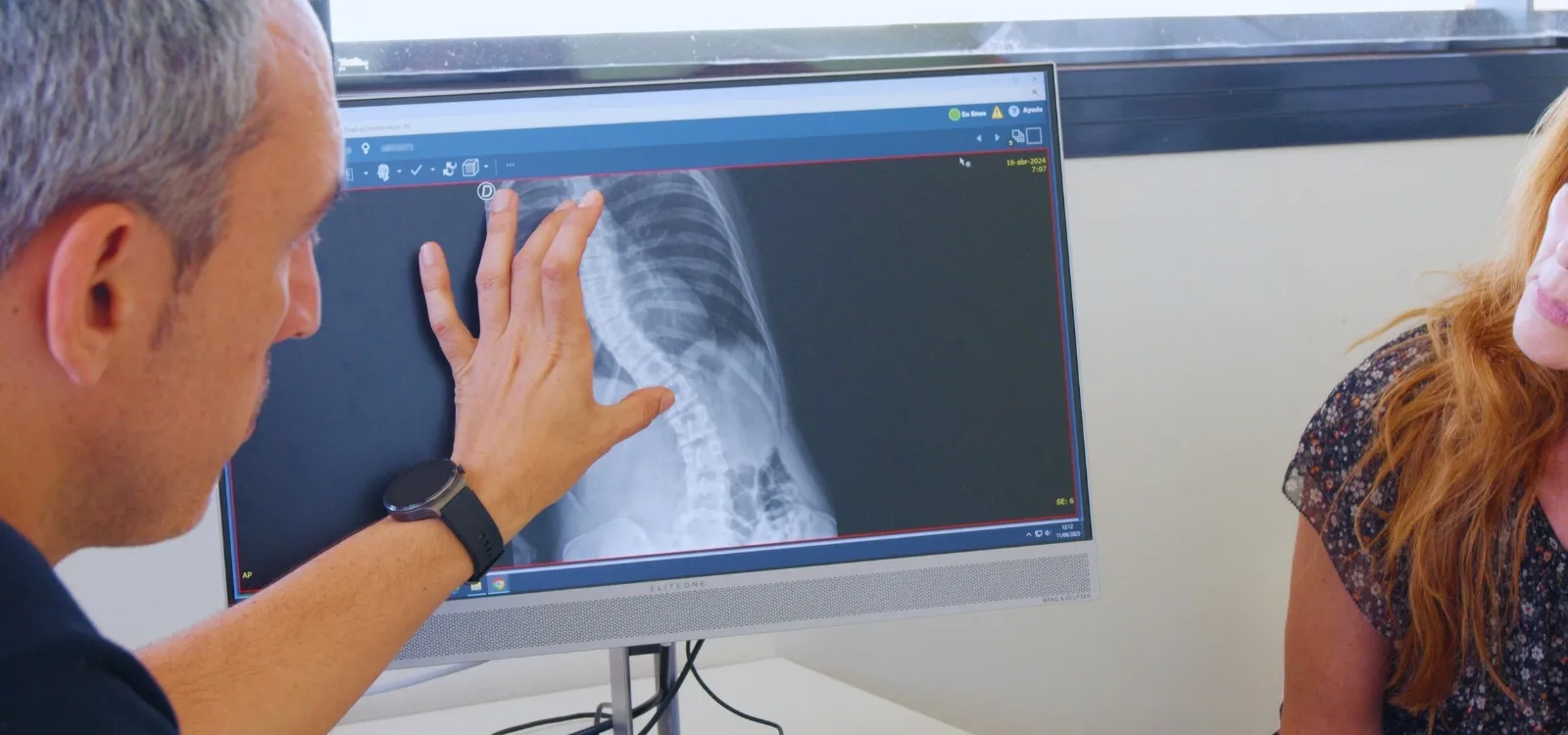
Scoliosis is a condition where there is abnormal curvature of the spine. This curvature can be mild to severe and can worsen over time if not properly treated.
The large majority of cases of scoliosis have an unknown cause, although some cases are caused by problems with the spinal column (congenital malformations, injury, nerve or muscle diseases or genetic mutations).
Diagnosing scoliosis
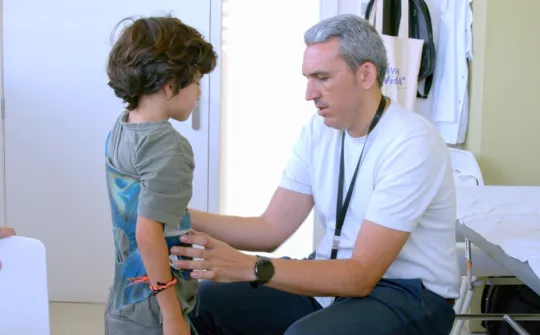
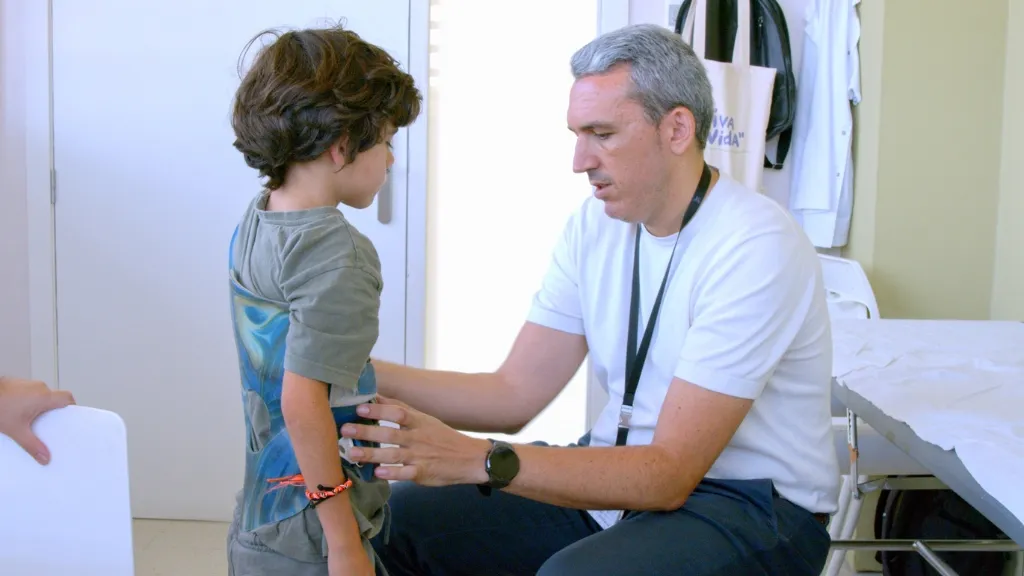
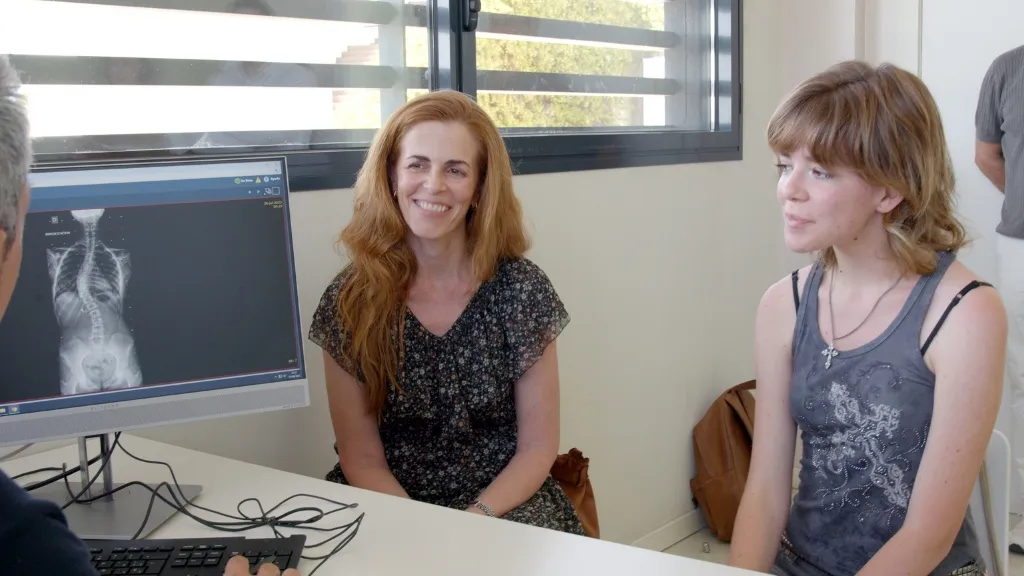
Scoliosis can be diagnosed by a physical examination, in which the physician will assess the curvature of the spine. If scoliosis is suspected to be present, an X-ray will be ordered to confirm the severity of the curvature.
In some cases, further testing may be needed to determine the cause of the scoliosis.
Signs of spinal scoliosis:
- Uneven shoulders.
- Curved spine.
- Uneven hips.
Treating scoliosis
Treatment for scoliosis in children depends on the severity of the curvature and the child’s age.
In milder cases, it can be sufficient for the child to attend regular check-ups to monitor progression of the curvature. In more severe cases, an orthopedic corset brace may be required to correct the curvature.
In very severe cases, surgery may be needed.
Pioneers in innovative surgical techniques to treat scoliosis
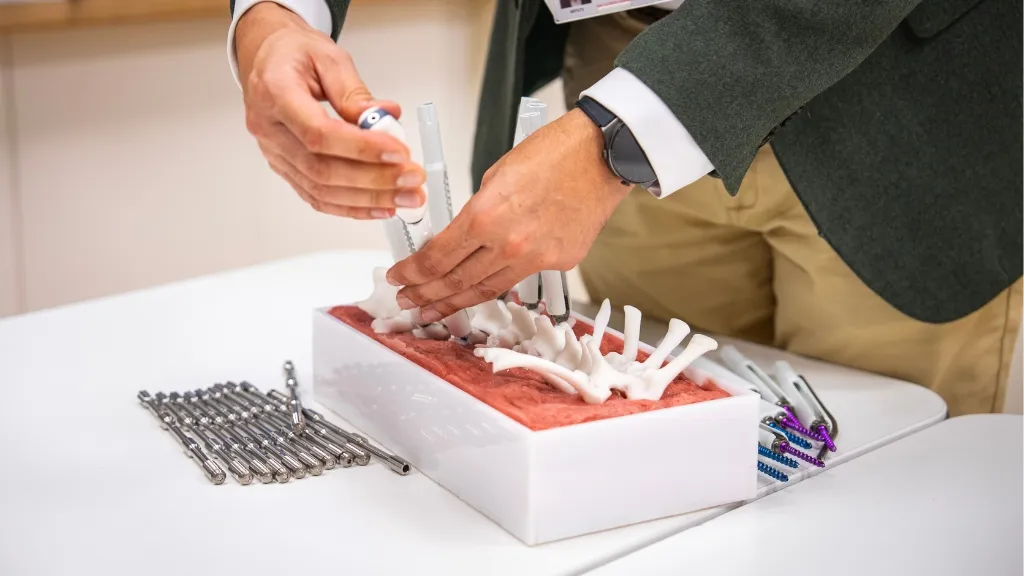
We offer a broad range of spinal surgical procedures, including non-fusion techniques for idiopathic scoliosis, with surgical navigation and personalised 3D modelling for improved efficiency and precision.
Using augmented reality, the orthopedic surgery team has access to real-time images of the surgical zone overlaid with images of the surgical plan. This juxtapositioning of images allows the team to carry out the procedure as planned, and results in 94% of screws being precisely fitted into their required location in the patient’s spine to correct the curvature.
This new technology results in an obvious reduction to the likelihood of reintervention.
Augmented reality is particularly useful when taking anatomical reference images is difficult, such as in cases of very severe deformities, when the vertebrae are abnormally shaped (skeletal dysplasia) and there is also some kind of vertebral malformation.
In addition, healthcare professionals feel that augmented reality technology will be especially useful for non-invasive procedures in cases of less severe scoliosis that do not require bone resection, and which, until now, have been approached via open surgery.
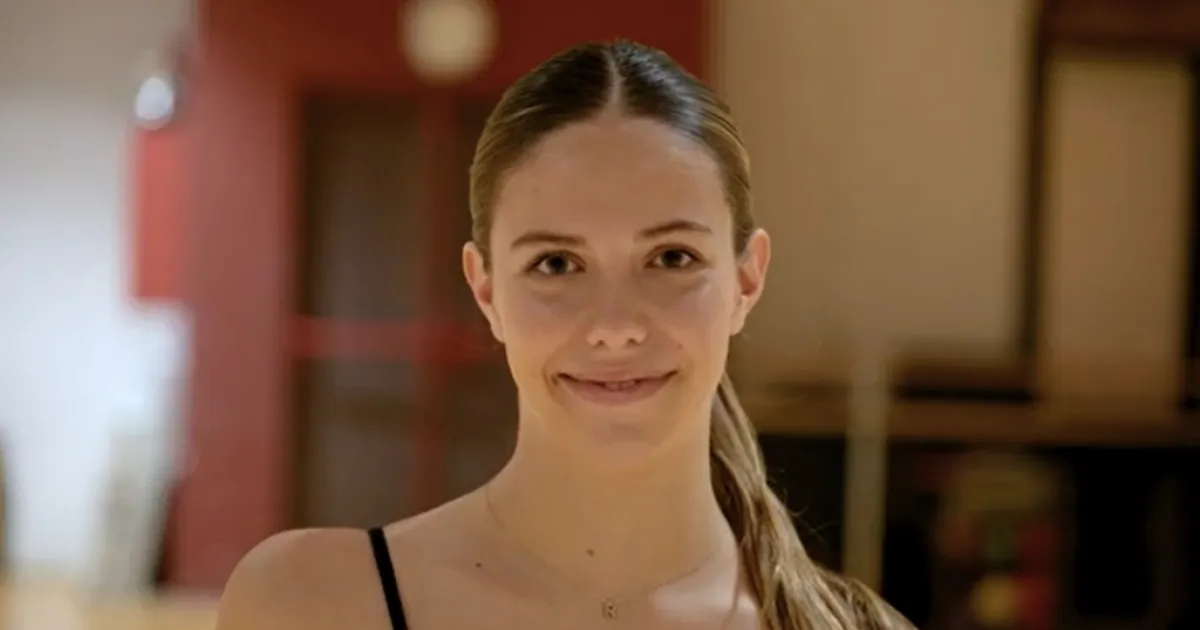
Scoliosis surgery - Rita’s story
Indicators
Data 2024
Team
We are a multidisciplinary team of professionals from Surgery, Nursing, Radiology, Neurophysiology and Anaesthetics, led by Dr Alejandro Peiró García – a specialist in spinal surgery, spine deformities, early-onset scoliosis and adolescent idiopathic scoliosis.
In addition, we count on the support of other staff and departments at the SJD Barcelona Children's Hospital: Neurology, Neurosurgery, Nutrition, Infectious Diseases, Pulmonology, General surgery (Thoracic), Rehabilitation, Paediatric Intensive Care, Heart Surgery, Orthopaedics, Genetics, Child Life and Psychology.
Research
- Strategic partnerships with other hospitals and reference centres to broaden the reach of our research.
- Active participation in scientific societies to raise awareness of the unit and to raise funds for research.
In 2024, the research poster presented by Dr Alejandro Peiró on the use of orthopedic corset braces in children and adolescents was awarded the John H. Moe Best Basic Research Poster Award. The study concerns a randomised clinical trial to compare the impact on quality of life between full-time and night-time braces in adolescent idiopathic scoliosis, with a 12-month treatment period.
Main results
- The study confirmed that an orthopedic corset brace effectively halted the progression of scoliosis in the majority of cases
- Only one or two in every ten treated patients ended up needing surgery.
- This reinforces the importance of early diagnosis and intervention, which, compared to many other countries, is done much more efficiently in Spain.