Patient portal

There are currently more than 7,000 described rare diseases; 95 per cent of these have no specific treatment, and it takes more than four years for 25 per cent of affected patients to receive a diagnosis.
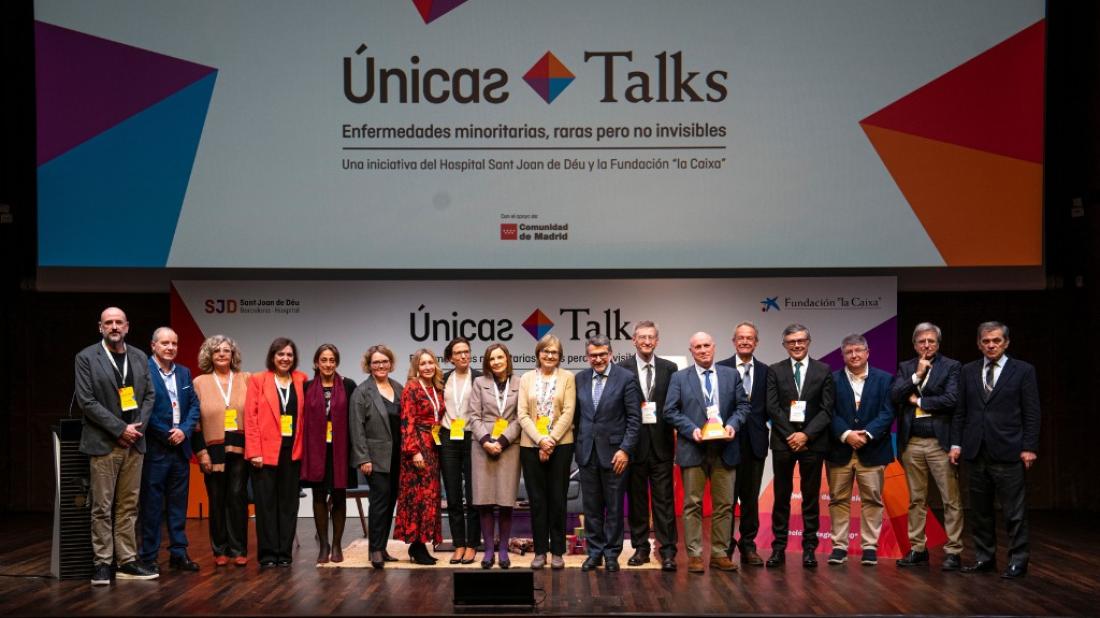
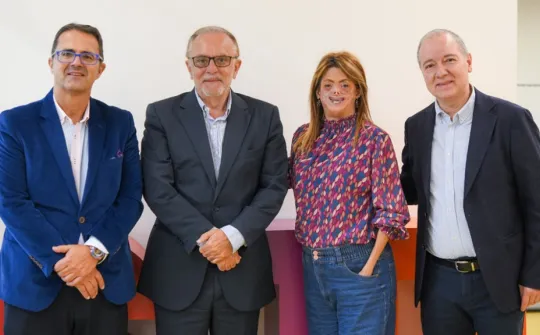
Únicas Talks held its second edition at CaixaForum in Madrid. The event, organised by the SJD Barcelona Children's Hospital and the "la Caixa" Foundation — organisations that have formed a partnership to conduct research into rare paediatric diseases —, discussed the priorities to be addressed in tackling rare diseases, such as the need to speed up diagnoses and develop new therapies, and the importance of data sharing and networking.
The event, which was supported by the Spanish Foundation for Rare Diseases (FEDER), was attended by experts from the research, clinical and regulatory sectors, as well as representatives from government bodies and patient and family organisations. Speakers included representatives from some of the 30 hospitals that form part of the Únicas Network, a project aimed at improving care for paediatric patients with rare diseases, which is co-ordinated by the Regional Ministry of Health of the Community of Madrid and the SJD Barcelona Children's Hospital.
The experts discussed how to streamline the diagnosis of these patients and the role of new technologies and digital transformation in this field. They also addressed new genomic medicine treatments for the diagnosis of paediatric rare diseases and access to new therapies for all patients.
In her closing remarks at the conference, Encarna Guillén, strategic director of the Únicas SJD project, head of the Genetics Department at SJD Barcelona and president of the Spanish Human Genetics Association, emphasised “the need to bring about a transformation in knowledge and care in order to bring about change and improve access to diagnosis, new treatments and a better quality of life for children with rare diseases, as well as for their families and carers”. She added that “this transformation must reach all parts of Spain through the Únicas network, always on the basis of equity”.
In the words of Ángel Font, Deputy Director-General for Research and Grants at the “la Caixa” Foundation: “Through our steadfast support for research and innovation in the field of rare diseases, we wish to contribute to the hope of achieving faster diagnoses and effective treatments, with the ultimate aim of improving the quality of life of patients and their families, whose lives are currently severely affected.”
As these are rare conditions, the number of people affected is very small, and it is necessary to identify them at national and global level.
Difficulties in diagnosis
The existence of more than 7,000 rare diseases, some of which are ultra-rare (with only a few cases worldwide), makes them difficult to diagnose because they are unknown even to many healthcare professionals.
This situation means that many patients have to wait for years, undergo dozens of tests and visit numerous specialists and even different hospitals before receiving a definitive diagnosis. Currently, 25 per cent of affected children and their families wait more than four years from the onset of the first symptoms until they are diagnosed with the condition.
“One of FEDER’s ten priorities is to ensure rapid and equitable access to diagnosis, as the average time taken to obtain a diagnosis in Spain currently exceeds six years. We therefore call for measures to be introduced to guarantee access to genetic testing and neonatal screening techniques throughout the country,” says Juan Carrión, president of FEDER.
Lucía’s case
Carmen Sever, the mother of Lucía, a girl who was diagnosed with a rare condition called metachromatic leukodystrophy, spoke at the conference. In her case, the diagnosis came a year and a half after the first symptoms appeared. Lucía passed away because, at that time—more than 20 years ago—no treatment was available.
Currently, a gene therapy is available which is effective provided it is administered before the patient develops symptoms. Therefore, the only way to detect the condition, and ensure the treatment is effective, is through neonatal screening. There is a technique that works, but this condition is not yet included in the screening programme in our country.
Representative samples
One of the key factors in understanding the natural history of a disease and driving research to find new treatments is the collection of representative samples from patients affected by a rare disease. As these are rare conditions, the number of people affected per autonomous community is very small, and it is necessary to identify them at national and global levels. Currently, 95 per cent of these diseases have no specific treatment.
The Únicas Network: a partnership to improve diagnosis
The Únicas Network, which was recently established with the involvement of 30 Spanish hospitals, aims to provide a comprehensive solution for children suffering from rare diseases, taking into account both the needs of the care pathway — from diagnosis to treatment — and their social and family circumstances.
“With this network, we aim to reduce waiting times for a diagnosis by fostering collaboration between centres and sharing information,” says Manel del Castillo, managing director of SJD Barcelona Children's Hospital, and adds: “We also want to spare families the ordeal of travelling from one hospital to another in an attempt to get their child’s condition diagnosed. The aim is to move knowledge, not patients.”
The hospitals forming part of the Únicas network are developing a technological platform to share data, new treatments and services, which will improve the multidisciplinary care model, accessibility for these patients through telemedicine, diagnosis using precision diagnostic techniques, and equitable access to advanced therapies.
Related news